
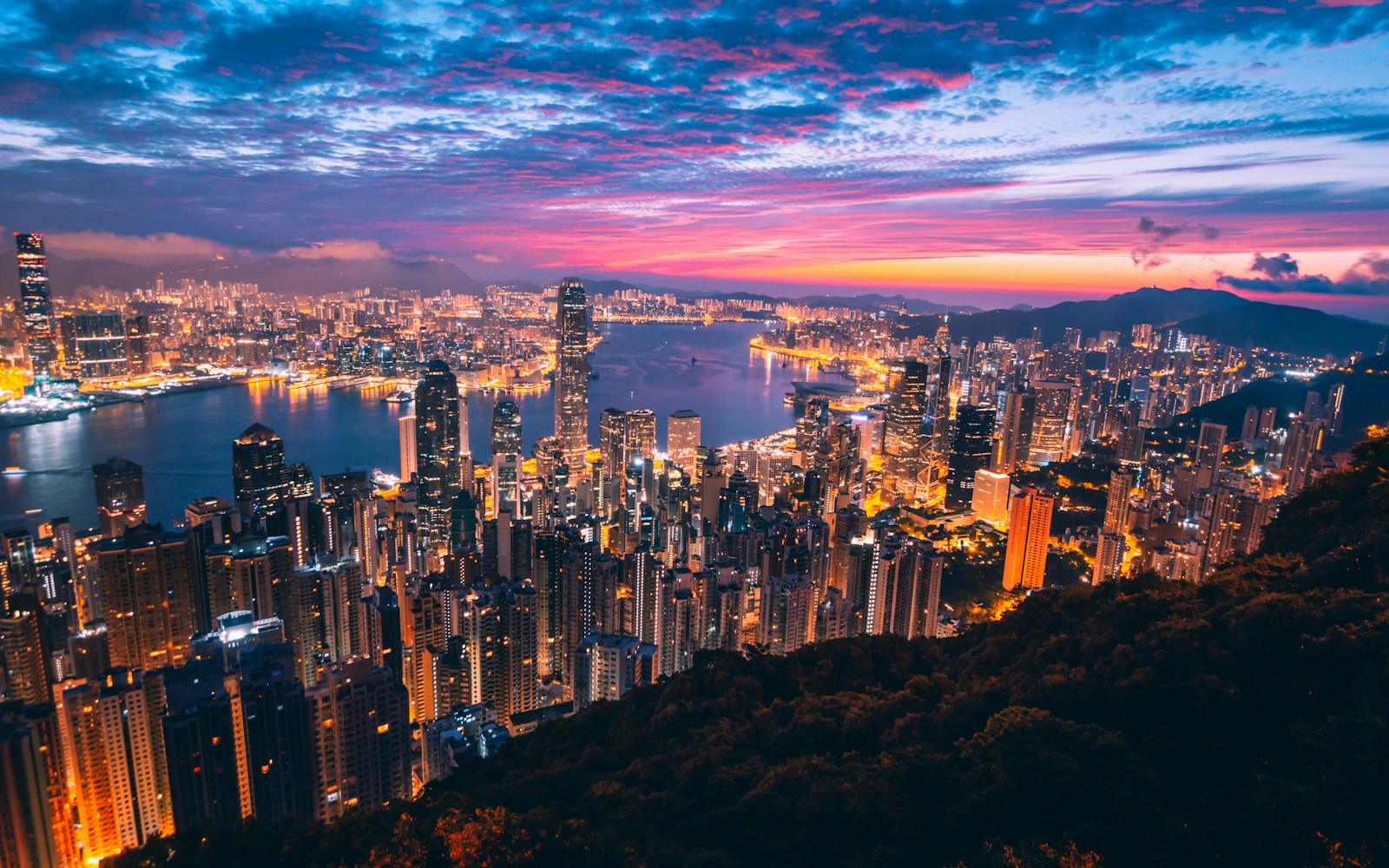
The short version: Hong Kong has genuine seasons, unlike most of the tropical Southeast Asian cities on this site — a real, sometimes chilly winter, a hot and humid summer with an actual typhoon season, and two short shoulder windows that are, honestly, the best time to be here. Late October through early December is Hong Kong’s sweet spot: warm days, low humidity, clear harbour views, and typhoons off the table.
Autumn: October to early December
The best weather of the year, and locals will tell you the same. Highs sit at a pleasant 24–27°C, humidity drops from summer’s oppressive levels to something genuinely comfortable, and skies clear enough that you actually get the harbour and Victoria Peak views the postcards promise (summer haze and humidity haze this out more than visitors expect). This window also avoids typhoon season entirely by late October. Book Peak Tram and Star Ferry evening slots ahead if visiting over a weekend — this is when everyone else has figured out the same thing.
Winter: December to February
Hong Kong’s winter genuinely surprises first-time visitors expecting Southeast Asian heat year-round. January highs average 16–18°C, with overnight lows that can drop to 10°C or lower on cold snaps — pack a real jacket, not just a light layer, especially if you’re heading up to Victoria Peak or the New Territories where wind chill bites harder. It’s also dry — this is the least rainy stretch of the year, with some months seeing under 30mm total. Chinese New Year (late January or February, date shifts yearly) brings huge domestic and mainland tourist crowds and inflated hotel rates — check the lunar calendar against your dates.
Summer: June to September — and typhoon season
Hot, humid, and unpredictable in a specific way: this is Hong Kong’s typhoon season, running officially May to November but concentrated July–September. The Hong Kong Observatory uses a numbered Signal system (1, 3, 8, 9, 10) — Signal 8 triggers a citywide shutdown: schools close, most offices send staff home, MTR service reduces, and ferries stop running. It doesn’t happen every trip — most storms pass without a direct hit — but if you’re visiting July–September, build a one- or two-day buffer into any tight itinerary (especially before a flight out) in case a Signal 8 grounds you for a day. Daytime highs run 31–33°C with humidity regularly above 85%, and afternoon thunderstorms are a near-daily occurrence outside of actual typhoon events.
Spring: March to May
The trickiest season to pack for — temperatures climb steadily from a cool 18°C in March to a humid 27°C by May, and this is also when Hong Kong’s notorious spring humidity and “returning moisture” phenomenon hits: condensation forms on windows, walls and floors as warm, wet air moves in over the still-cool infrastructure. Rain becomes more frequent through April and May as the wet season builds. Pack layers and expect grey, misty days more often than clear ones.
So, when should you actually go?
| Window | What to expect | Verdict |
|---|---|---|
| Late Oct–early Dec | Warm, dry, clear skies, no typhoon risk | Best overall |
| Dec–Feb | Cool, dry, occasional cold snaps | Great for walking/hiking, pack a jacket |
| Mar–May | Humid, misty, increasing rain | Least reliable, budget-friendly |
| Jun–Sep | Hot, humid, typhoon risk | Build in a buffer day if you go |
What to actually do if a typhoon hits your trip
- Monitor the Hong Kong Observatory’s signal number directly (hko.gov.hk) — hotel staff and taxi drivers will also know it, but don’t rely on translated news.
- Signal 8 or above: stay indoors, expect MTR/bus/ferry disruption and most shops and restaurants closed. It’s usually lifted within 12–24 hours.
- Airport operations rarely fully stop but expect delays and cancellations — check your airline’s app directly rather than the airport board.
- Outside typhoon events, a light umbrella covers 90% of Hong Kong’s rain — sold everywhere, including 7-Elevens, for under HK$50.
Travelling during typhoon season? Good travel insurance covers weather-disrupted flights, not just hospital visits. We use and recommend SafetyWing.
Frequently Asked Questions
Does Hong Kong actually get cold?
Yes — January highs average 16–18°C with lows near 10°C on cold snaps, occasionally dropping close to freezing on the Peak or in the New Territories. It’s a genuine coat-and-scarf winter by regional standards, even if mild compared to temperate climates.
How likely is a typhoon to disrupt my trip?
Most trips in typhoon season (May–November, peak July–September) pass with no direct hit — Hong Kong sees roughly 5–6 tropical cyclones close enough to trigger a signal each year, and only a handful reach Signal 8+. Still, budget a spare day if your dates fall in the peak window.
What’s the single best month to visit?
November — reliably warm, dry, clear, and typhoon-free, with the added bonus of Hong Kong’s best skyline visibility of the year.
Typhoon Season Detail
Typhoon season runs roughly May through November, peaking July-September. The Hong Kong Observatory’s signal system (T1 through T10) governs public response: Signal 8 or above triggers a citywide shutdown — schools close, most offices send staff home, and the MTR and buses scale back or suspend service. Direct hits are relatively rare (most systems pass close enough to trigger a signal without making landfall), but a T8+ signal during a trip can genuinely reshape a day or two of your itinerary, so build a buffer day into any visit planned for peak season. Track the Observatory’s warnings directly via their app rather than relying on general forecasts, since signal changes can happen with only a few hours’ notice.
Rainfall and Humidity by Season
Spring (March-May) is warm and increasingly humid with rising rainfall, averaging 70-330mm/month as the season progresses toward summer. Summer (June-August) is Hong Kong’s wettest and most humid stretch, with monthly rainfall often exceeding 300-400mm and humidity regularly above 80%, alongside daytime highs of 31-33°C. Autumn (September-November) is widely considered the best time to visit — rainfall drops sharply after September, humidity eases, and temperatures settle into a comfortable 24-29°C range with plenty of clear days. Winter (December-February) is Hong Kong’s driest period, some months under 30mm of rain, with cooler, more comfortable temperatures of 15-20°C, though it can feel colder than the number suggests due to damp, windy days.
Shoulder Season in More Detail
October to early December and March to April are Hong Kong’s two shoulder windows, and they’re not interchangeable. Autumn (October-early December) is the more reliable of the two: humidity drops sharply after the typhoon season tapers off in late September, skies clear, and daytime temperatures settle into a genuinely comfortable 22-27°C range with cool evenings — widely considered the best all-round window to visit, and hotel rates and crowd levels reflect that with a modest premium versus deep summer. Spring (March-April) is more of a mixed bag: temperatures are similarly mild, but this is also when Hong Kong’s notorious “return of the south wind” humidity spikes hit, bringing dense fog and condensation that can fog up camera lenses, cause walls and floors in poorly ventilated apartments to visibly “sweat,” and cut visibility on outdoor viewpoints to near zero for days at a stretch — a genuine nuisance rather than a minor inconvenience, and worth building buffer days into any itinerary reliant on clear-day views during this window.
What to Pack by Season
Summer (June-September) calls for the lightest, most breathable clothing possible — humidity above 80% is routine, and cotton or linen will feel noticeably more bearable than synthetic fabrics; a compact umbrella is closer to essential gear than an accessory, given how frequently the city gets sudden, heavy downpours even outside named storms. Winter (December-February) is mild by most standards but genuinely cool by Hong Kong’s own — a light jacket or heavy sweater covers most days, though a proper coat is worth packing for the occasional cold snap when temperatures drop into single digits Celsius, which happens most years for at least a few days. Shoulder-season packing should assume both extremes are possible within the same week: a light layer for warm afternoons, something warmer for cooler mornings and evenings, and rain protection regardless of month, since Hong Kong has no genuinely dry season.
How Weather Affects Specific Activities
Hiking the city’s well-regarded trail network — the Dragon’s Back, MacLehose Trail, and Lantau’s peaks among the most popular — is best done October through April; summer’s heat and humidity make the exposed, often shadeless sections genuinely risky for heat exhaustion, and several trail-related hospitalisations are reported most summers. Beaches (Repulse Bay, Shek O, and the cleaner, quieter options on Lantau and Sai Kung’s coastline) are a summer activity almost by definition, but afternoon thunderstorms are common enough in July and August that a morning beach trip beats an afternoon one for avoiding a sudden downpour. Victoria Peak’s famous skyline view is entirely weather-dependent and this is worth stressing to visitors expecting a guaranteed photo: autumn’s clear, low-humidity days offer the best visibility by a wide margin, while spring’s fog and summer’s haze can reduce the view to a grey wall with startling frequency — check a live webcam or recent visitor reports before making a special trip up, rather than assuming any given day will deliver the postcard shot.