
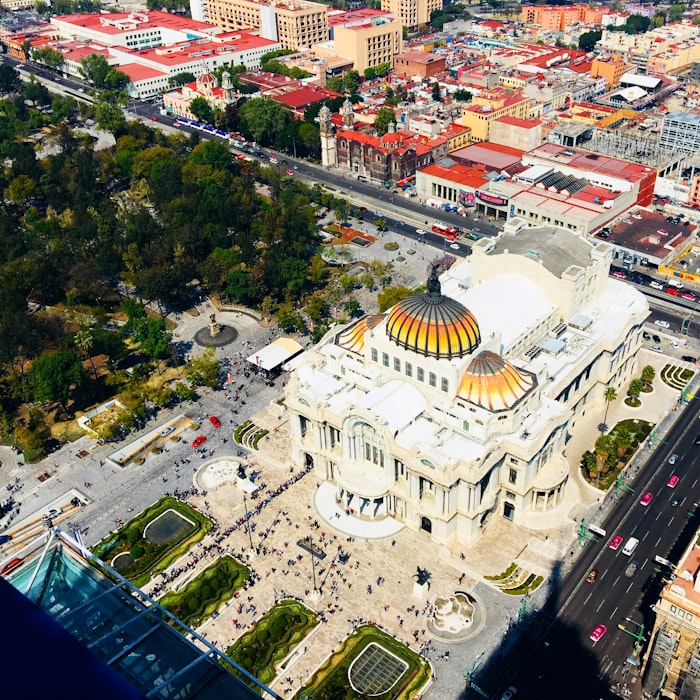
Mexico City has become one of the most popular long-stay destinations in the Americas, and for good reason: a serious food culture, low costs relative to North America and Europe, a mild climate year-round, and a generous entry policy. It has also become crowded with remote workers, which brings its own complications. This guide covers the practical side of staying a while.
Arriving and visas
Entry is relatively straightforward compared with most countries. Many nationalities receive a tourist entry of up to 180 days, though the exact length granted is at the immigration officer’s discretion and shorter stamps have become more common — do not assume the full period.
For anything longer or more settled, apply for a Temporary Resident Visa at a Mexican consulate before travelling; it generally cannot be converted from tourist status once you are in the country. Requirements centre on proving income or savings above a set threshold.
A note worth taking seriously: the influx of remote workers has driven real rent increases in central neighbourhoods and generated genuine local resentment. Learning Spanish, paying local rates rather than inflating them, and staying longer in fewer places all matter more here than in most destinations.
Where to live
Roma Norte and Condesa are the default choices for newcomers — walkable, leafy, full of cafes and coworking, and the centre of the expat scene. They are also the most expensive and the most affected by the rent pressure above.
Juárez and Escandón sit adjacent and cost less. Coyoacán and San Ángel to the south are quieter, more traditional and genuinely beautiful, at the cost of a longer commute into the centre. Polanco is upmarket and more corporate.
Furnished short-term rentals are abundant but priced for foreigners. Longer local leases are substantially cheaper and usually require a guarantor, which is the main barrier for newcomers.
Getting connected
Quick and cheap — one of the easier things to sort on arrival. Telcel has by far the best nationwide coverage and is the default recommendation, available at OXXO convenience stores on nearly every block as well as official shops, needing only a passport. AT&T Mexico and Movistar are the main alternatives.
Data plans are inexpensive by North American or European standards. Coverage in the city is good; if you plan trips outside, Telcel’s advantage grows considerably.
Working from Mexico City
The coworking scene has grown quickly alongside the city’s rise as a nomad hub, concentrated heavily in Roma Norte and Condesa. WeWork runs multiple locations across Roma Norte, Condesa and Polanco at prices notably below their US or European equivalents, and there is a healthy independent scene alongside.
Cafe working is common and accepted in the central neighbourhoods. The practical constraint is electricity and internet reliability, which is generally good but less consistent than in Tokyo or London — worth having a backup plan if you take client calls.
Healthcare
Private healthcare is affordable and of high quality, which is why most expats and remote workers use it rather than the public system. Specialist consultations are inexpensive by US standards, and pharmacies are widespread with some offering low-cost attached consultations for minor issues.
Private insurance is worth having for anything serious, and travel or nomad insurance is the usual route for people on tourist status. Altitude is the one thing newcomers underestimate: the city sits at over 2,200 metres, and it is normal to feel the effects for the first week or two.
Eating
One of the best food cities in the world, spanning legendary street stalls to globally recognised fine dining. Street tacos are the backbone — al pastor, sliced from a vertical spit, is the emblematic version and a late-night institution.
Markets are central to eating well and cheaply. The fine-dining scene is genuinely world-class but represents a tiny fraction of what makes the city remarkable; the everyday standard is the real story. Eat where there are queues of locals, and be sensible rather than fearful about street food.
Nightlife
Genuinely world-class, spanning mezcalerías, rooftop bars and one of Latin America’s strongest club scenes. Roma Norte and Condesa form the main hub for remote workers, dense with cocktail bars and rooftop terraces — polished and design-forward. Centro Histórico offers something rougher and more traditional, including classic cantinas.
Nights run late by European standards, let alone North American ones. Mezcal is taken seriously and worth learning about properly. Use registered taxis or ride apps late at night rather than hailing on the street.
The bottom line
Mexico City offers an unusually good combination of cost, culture and climate, which is precisely why it is no longer a secret. The honest caveats are altitude, the need for at least functional Spanish outside the expat bubble, and the fact that the remote-work influx has real local consequences. It rewards people who engage with the city rather than treating it as a cheap office.