
Quick verdict: Tiong Bahru for independent travellers and nomads who want character and community. Chinatown/Tanjong Pagar for value, food, and local atmosphere. Orchard/Somerset for convenience and safety (boring but efficient). Marina Bay/CBD for a short trip where location is everything. Sentosa only if you specifically want resort beach access. The MRT connects everywhere — your station matters more than your exact postcode.
Singapore is a small, well-organised city where every major neighbourhood is connected by one of Asia’s best metro systems. The question isn’t whether you can get around from your chosen area — you can, in 20–35 minutes from almost anywhere — but rather what kind of Singapore experience you want. The city has clear character zones, from the corporate gleam of Marina Bay to the heritage shophouses of Tiong Bahru.
Marina Bay / CBD — The Iconic Singapore
MRT: 5 min to everythingWalking distance to attractionsExpensiveSoulless off-hours
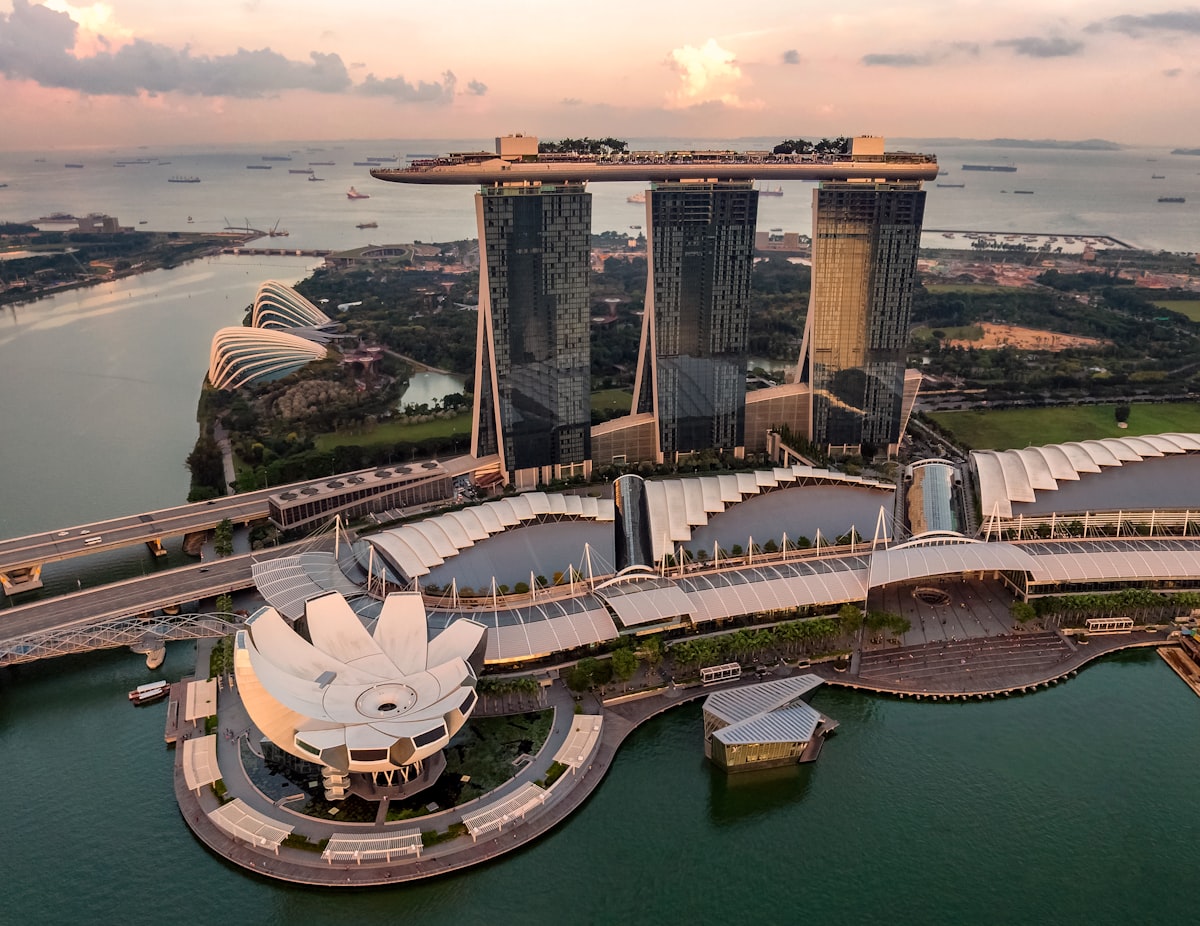
Marina Bay is Singapore’s showpiece — the Marina Bay Sands, Gardens by the Bay, the waterfront promenade, the financial district towers lit up at night. It’s genuinely impressive and absolutely worth spending time in. As a place to sleep, it’s expensive and emptier than you’d expect outside business hours. Hotels here are largely luxury properties; mid-range options are limited.
Right for: short trips (3–5 days) where you want to see all the highlights without travel time. Business travellers with expense accounts. One night in a Marina Bay hotel to see the light show is worth doing if budget allows; a week here would feel sterile.
Orchard / Somerset — Reliable Middle Ground
Excellent MRT accessEverything nearbyTouristyShopping-focused
Orchard Road is Singapore’s main shopping boulevard — ION Orchard, Ngee Ann City, Paragon, all stacked along 2km of mall. As a place to stay, it’s convenient without being interesting. Mid-range to luxury hotels are plentiful. Somerset station is on both the North-South and Circle MRT lines, making connections easy. You’ll never need to think about getting around, but you also won’t feel like you’ve discovered anything local.
Chinatown / Tanjong Pagar — Best Value, Great Food
Local atmosphereExcellent food sceneGood valueMRT: 3 stations
Chinatown and Tanjong Pagar run together into one of Singapore’s most characterful areas — heritage shophouses, hawker centres with $4–6 meals, a genuine Chinese-Singaporean neighbourhood feel, and a growing bar and restaurant scene on Club Street and Ann Siang Hill. The MRT connects Chinatown station directly to Marina Bay in one stop. Hotels are meaningfully cheaper than equivalent Orchard properties.
This is the area most independent travellers end up preferring once they’ve been to Singapore a few times. Less shiny than Marina Bay, more alive than Orchard.
Tiong Bahru — Singapore’s Most Liveable Neighbourhood
Independent cafesGenuine communityPre-war architectureLimited hotel options15 min to Marina Bay
Tiong Bahru is Singapore’s 1930s housing estate turned gentrified neighbourhood — art deco apartment blocks, an excellent wet market, independent bookshops, great coffee, and an unusually human-scale streetscape for Singapore. It’s where many young professionals and expats choose to live. Hotel options are limited — you’re mostly looking at boutique hotels and serviced apartments rather than chains. But if you can find something, the neighbourhood rewards you.
Tiong Bahru MRT station is on the East-West Line, 15 minutes from Marina Bay, 10 minutes from Orchard. The walk from the station to the neighbourhood’s best parts is pleasant rather than a chore.
East Coast — For Families and Long-Stay Expats
Quiet and spaciousBeach accessFar from centreCar/bus dependent
The East Coast is where expat families and long-stayers often end up — large apartments, good international schools, East Coast Park running along the beach. It’s suburban Singapore, which means quiet, well-resourced, and disconnected from the city’s buzz. MRT access is improving but still limited in parts. Not recommended for short stays unless you specifically want a quiet base with beach access.
Getting Around: MRT Essentials
Singapore’s MRT is excellent — fast, air-conditioned, on-time, cheap. A stored-value EZ-Link card (buy at any MRT station, top up at 7-Eleven or station machines) is the only transport tool you need. Single journeys cost S$0.92–S$2.20 depending on distance. A trip from Chinatown to Orchard: under S$1.50 and 12 minutes. From Tiong Bahru to Marina Bay: 6 minutes.
Grab (the regional ride-hailing app) fills gaps but is notably more expensive in Singapore than elsewhere in Asia — S$15–25 for most city-centre trips. Use the MRT where possible.
| Area | MRT line | To Marina Bay | Hotel price range |
|---|---|---|---|
| Marina Bay/CBD | Red, Circle | 0 min | S$200–600+/night |
| Orchard/Somerset | Red, Circle | 12 min | S$150–400/night |
| Chinatown/TJ Pagar | Red, Purple | 5 min | S$100–250/night |
| Tiong Bahru | Green | 15 min | S$120–280/night |
| East Coast | Limited | 30 min | S$80–200/night |
Find Singapore Accommodation
Search Singapore hotels on Booking.com — use the map view to check exact MRT station proximity before booking. The difference between “near Chinatown station” and “near Chinatown” can be 10 minutes’ walk in Singapore’s heat.
• Singapore — The Complete Guide
• Cost of living in Singapore
• Singapore digital nomad guide
• Where to stay in Bali
• Where to stay in Hong Kong
• Where to stay in Kuala Lumpur