Quick verdict: Dubai Marina / JBR for beach access and a walkable waterfront. Downtown Dubai for the Burj Khalifa and tourist highlights. DIFC if you’re here for business and dining. Jumeirah for a quieter residential experience. Deira/Bur Dubai if budget is the primary concern. The Metro connects Downtown and Marina well; everything else essentially requires a car or Uber.
Dubai is a spread-out city built around car culture, which means where you stay matters more than in compact cities with good public transport. The Metro has two lines covering key areas, but significant parts of Dubai remain car-dependent. Understanding the geography before you book saves you from paying premium prices in one area while spending 30 minutes in a taxi getting to everything else.
In This Guide
Downtown Dubai — The Tourist Epicentre
Burj Khalifa / Dubai MallMetro: Burj Khalifa/Dubai Mall stationExpensiveHeavily tourist-facing
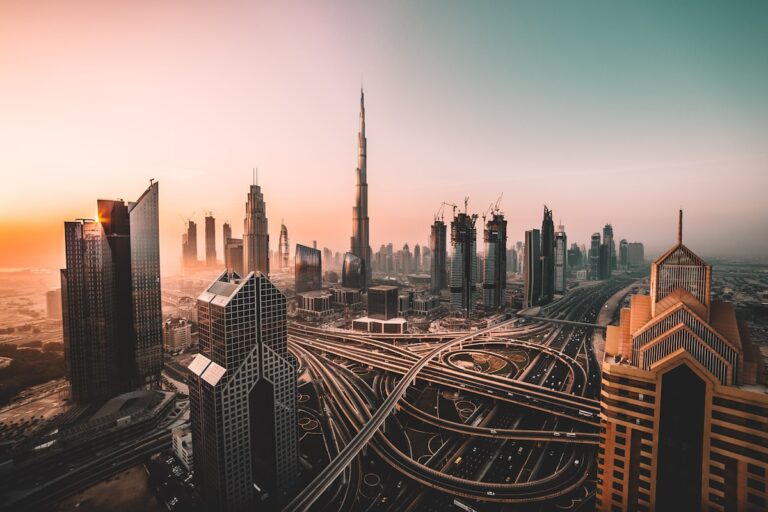
Downtown Dubai is where the Burj Khalifa, the Dubai Fountain, and the Dubai Mall live. It’s spectacular — genuinely so. At night, with the fountain show running beneath the world’s tallest building, it delivers on the Dubai promise. As a place to stay for a week, it can feel theme-park-like — manicured, impressive, and not particularly local.
Hotels here range from mid-range (from AED 500/night) to ultra-luxury (Armani Hotel inside the Burj Khalifa). The Burj Khalifa/Dubai Mall Metro station puts you on the Red Line connecting to the airport and Dubai Marina.
Dubai Marina — Waterfront and Walkable
Marina WalkJBR beach nearbyMetro: Dubai MarinaNightlife can be loud
Dubai Marina is a purpose-built waterfront district — high-rise towers flanking a marina promenade, with cafes, restaurants, and boat tours along the water. It’s popular with expats and the most walkable part of non-downtown Dubai. JBR (Jumeirah Beach Residence) Beach is a 10-minute walk, providing actual beach access without a taxi.
The Metro (Dubai Marina station on the Red Line) connects to Downtown in 15 minutes and the airport in 35 minutes. The Marina Tram connects within the Marina area. This is the area most Western expats recommend for first-time visitors who want a balance of beach, activity, and urban amenity.
DIFC — Business Dubai
World-class restaurantsBusiness communityVery expensiveDead on weekends
The Dubai International Financial Centre is Dubai’s CBD — towers, regulated financial companies, international law firms, and the best restaurant concentration in the city. The Gate Village has galleries, high-end dining, and a pedestrian zone that’s unusually pleasant for Dubai. DIFC empties on weekends and feels corporate at most hours. For business travel it’s ideal; for a holiday it’s the wrong base.
Accommodation in DIFC is all at the premium end — business hotels and luxury serviced apartments from AED 600–1,500+/night.
Jumeirah — Residential Expat Dubai
Leafy and quietBeach accessCar essentialLimited public transit
Jumeirah Beach Road is old-money expat Dubai — low-rise villas, beach clubs, independent cafes, and a pace that’s notably slower than Downtown or the Marina. The Jumeirah Beach Hotel and Burj Al Arab are here. Without a car, Jumeirah is inconvenient — it’s not on the Metro and distances between points are too far to walk comfortably, especially in summer.
Right for: families with a car, longer-stay visitors, those who specifically want a beach hotel with a residential neighbourhood nearby.
Deira / Bur Dubai — Old City and Budget
Cheapest accommodationGold and Spice SouksOlder, rough edgesFar from beach
Deira is Dubai’s original commercial district, north of the Creek — dense, busy, ethnically diverse, and the most “authentic” part of Dubai in the sense of representing what the city was before the skyscrapers arrived. The Gold Souk and Spice Souk are here. Hotels are significantly cheaper than anywhere else in the city. The Metro connects Deira to the rest of Dubai adequately.
Transport in Dubai
The Dubai Metro is good but covers a limited slice of a very large city. The Red Line runs from the airport through Downtown and Dubai Marina. The Green Line covers Deira and Bur Dubai. Most of the villa areas, JLT, Dubai Hills, and much of “new Dubai” are metro-free. A Nol card (Metro stored value) is essential; single fares are AED 3–8.50 depending on zones.
Uber and Careem (the local equivalent) are well-priced by international standards. AED 15–25 for most within-zone trips. The catch: during peak times or in the middle of summer, waiting for a car in 45°C heat isn’t pleasant. Budget for Careem/Uber as your primary non-Metro transport method.
| Area | Best for | Metro? | Budget range |
|---|---|---|---|
| Downtown Dubai | Tourists, Burj Khalifa | Yes (Red) | AED 500–2,000+/night |
| Dubai Marina / JBR | Most visitors | Yes (Red) | AED 400–1,500/night |
| DIFC | Business travellers | Near (10 min) | AED 600–2,000+/night |
| Jumeirah | Families, beach | No | AED 500–3,000+/night |
| Deira/Bur Dubai | Budget, souks | Yes (Green) | AED 150–400/night |
Find Dubai Accommodation
Search Dubai hotels on Booking.com — filter by area to compare prices between the Marina (waterfront, popular), Downtown (central, expensive), and Deira (cheap, less convenient). Prices fluctuate enormously between peak (October–April) and off-peak (summer) seasons — a July Dubai trip can be 40–50% cheaper than December.
• Dubai — The Complete Guide
• Cost of living in Dubai
• Dubai digital nomad guide
• Dubai visa guide
• Where to stay in Bali
• Where to stay in Singapore
Frequently Asked Questions
Where should I stay in Dubai for a first visit?
Dubai Marina — it’s the most walkable non-downtown area, has JBR beach a 10-minute walk away, and connects to Downtown via Metro in 15 minutes.
Which areas are on the Dubai Metro?
Downtown Dubai and Dubai Marina (Red Line), and Deira/Bur Dubai (Green Line) — Jumeirah, DIFC’s immediate surroundings, and most villa areas are metro-free.
What’s the cheapest area to stay in Dubai?
Deira/Bur Dubai, with hotels from AED 150–400/night — significantly cheaper than anywhere else in the city.
Do I need a car to stay in Jumeirah?
Essentially yes — Jumeirah isn’t on the Metro and distances are too far to walk comfortably, especially in summer heat.