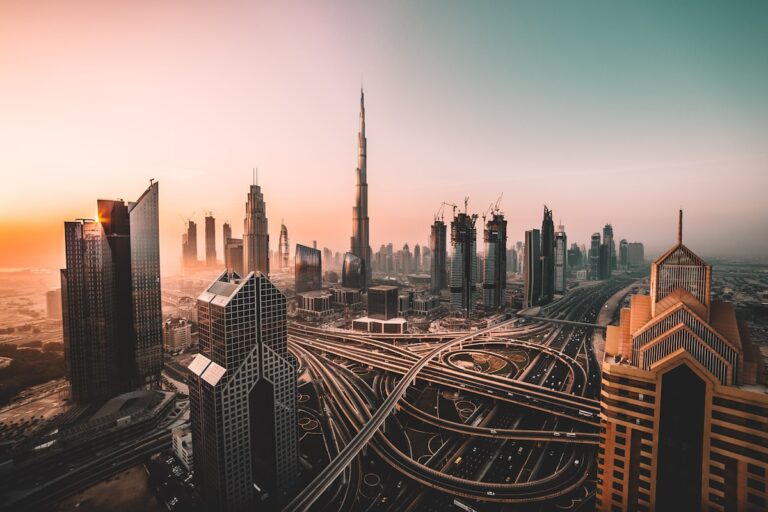
Bottom line: Dubai makes sense as a nomad base for high earners who want 0% tax, excellent infrastructure, and a hub between East and West. The Virtual Working Programme visa ($287 + insurance) is real and relatively accessible. The honest limits: summer heat makes it genuinely unpleasant for 4 months, car dependency is expensive, alcohol restrictions require adjustment, and overall cost is high. Go in October–April, not July–August.
Dubai has positioned itself deliberately as a hub for high-earning remote workers and digital nomads. The Virtual Working Programme launched in 2021 and has been refined since — it’s a legitimate one-year renewable visa for remote workers earning from outside the UAE. Combined with 0% income tax, fast internet, and excellent business infrastructure, Dubai makes a coherent case for certain nomad profiles.
In This Guide
Why Dubai Works for Some Nomads
The tax argument: 0% income tax on personal income. For someone earning $150,000 USD equivalent, that’s $30,000–50,000 saved annually versus UK or Australian rates. This alone motivates many high earners to base in Dubai.
The location argument: Dubai is UTC+4, giving good overlap with Europe (morning) and Asia (afternoon to evening). As a flight hub, Expo/DXB reaches more countries with direct flights than almost any other city. For nomads who travel frequently, this matters.
The infrastructure argument: fast, reliable internet (Etisalat/du fibre at 1Gbps for AED 350–450/month), air-conditioned coworking spaces, excellent private healthcare, and a well-functioning city administration. It works.
The Virtual Working Programme
Dubai’s dedicated remote worker visa. Requirements as of 2026:
- Remote employment or freelance work: you must work for a company outside the UAE, or as a self-employed person with clients outside the UAE
- Minimum monthly income: $3,500 USD (AED 12,855). Employment letter or 3-month bank statements showing this income.
- Health insurance covering the UAE: mandatory. Can be arranged through Dubai’s recommended providers or international plans that explicitly include UAE coverage.
- Visa fee: $287 USD (approximately AED 1,054), plus document processing fees that typically bring the total to AED 2,000–3,000.
- Processing time: 5–14 working days if documents are complete.
The visa is valid for 1 year, renewable. It does not require UAE company registration and does not create UAE tax residency in the traditional sense — consult a tax advisor if you have home-country residency obligations you’re trying to manage.
Best Coworking Spaces in Dubai
| Space | Location | Price | Notes |
|---|---|---|---|
| Astrolabs | Dubai Internet City | Desk from AED 1,500/month | Startup-focused, strong community, not most central |
| The Cribb | Business Bay + others | Hot desk AED 100/day, monthly from AED 1,800 | Boutique, design-forward, popular with freelancers/creatives |
| WeWork | DIFC, Marasi Drive + others | Monthly from AED 2,200 | Standard global offering, consistent and reliable |
| Nook | Marina and Downtown | Hot desk AED 80–120/day | Popular with nomad community, social programming |
Internet
Dubai’s internet is fast and reliable. 1Gbps home fibre from Etisalat or du: AED 350–450/month. Mobile data is reliable with extensive 5G coverage. Coworking spaces typically offer 100–500Mbps. Note: some VoIP services (WhatsApp calls, FaceTime audio) are intermittently blocked in the UAE — this is a real operational issue for nomads who rely on internet-based calls. Business-grade VoIP is available; consumer apps vary. Using a VPN is technically illegal in the UAE, though enforcement against individuals is rare. Address this honestly with clients before arriving.
Banking for Nomads
Opening a UAE bank account without residency is difficult. With the Virtual Working Programme visa, most banks (Emirates NBD, Mashreq, ADCB) will open accounts for you. Without residency, Wise (multi-currency account with Mastercard) is the practical solution — widely accepted in Dubai and avoids local bank fees on currency conversion. Arrange UAE banking after your visa is stamped.
Healthcare
Health insurance is mandatory for the Virtual Working Programme visa. Dubai’s private hospitals — Mediclinic, Cleveland Clinic Abu Dhabi (accessible from Dubai), Saudi German Hospital — are excellent. SafetyWing explicitly covers the UAE and may satisfy the visa insurance requirement — check the coverage terms match Dubai’s minimum requirements before relying on it for the visa application.
Honest Downsides
| Downside | Detail |
|---|---|
| Summer heat | May–September, 40–48°C — you live entirely between air-conditioned spaces for 4–5 months |
| Car dependency | A car is not optional unless directly on the Metro Red Line — add AED 2,500–4,500/month |
| Alcohol | Available only in licensed venues (hotels, specific bars), expensive and restricted — not in most restaurants/cafes |
| Cost | Budget AED 20,000–25,000/month ($5,400–6,800) for a comfortable life |
Serviced Apartments for Longer Dubai Stays
Search Dubai serviced apartments on Booking.com — monthly rates on furnished apartments are significantly lower than nightly hotel rates. JLT (Jumeirah Lakes Towers) offers the best value for Marina-area access. Business Bay for DIFC proximity.
• Cost of living in Dubai
• Where to stay in Dubai
• Dubai visa guide — Virtual Working Programme
• Bali digital nomad guide
• Singapore digital nomad guide
• Bangkok digital nomad guide
Frequently Asked Questions
Is Dubai a good base for digital nomads?
Yes for high earners wanting 0% tax and strong infrastructure — the Virtual Working Programme gives a legitimate 1-year visa, but summer heat, car dependency, and alcohol restrictions are real trade-offs.
How much does the Virtual Working Programme cost?
$287 USD visa fee plus document processing, typically totalling AED 2,000–3,000, requiring $3,500/month income and UAE-covering health insurance.
Can I use WhatsApp/FaceTime calls in Dubai?
Some VoIP services are intermittently blocked in the UAE — this is a real operational issue nomads should address with clients before arriving; business-grade VoIP is available.
What’s the biggest downside of Dubai for nomads?
Summer heat (40–48°C from May–September) and overall cost — budget AED 20,000–25,000/month for a comfortable life.