
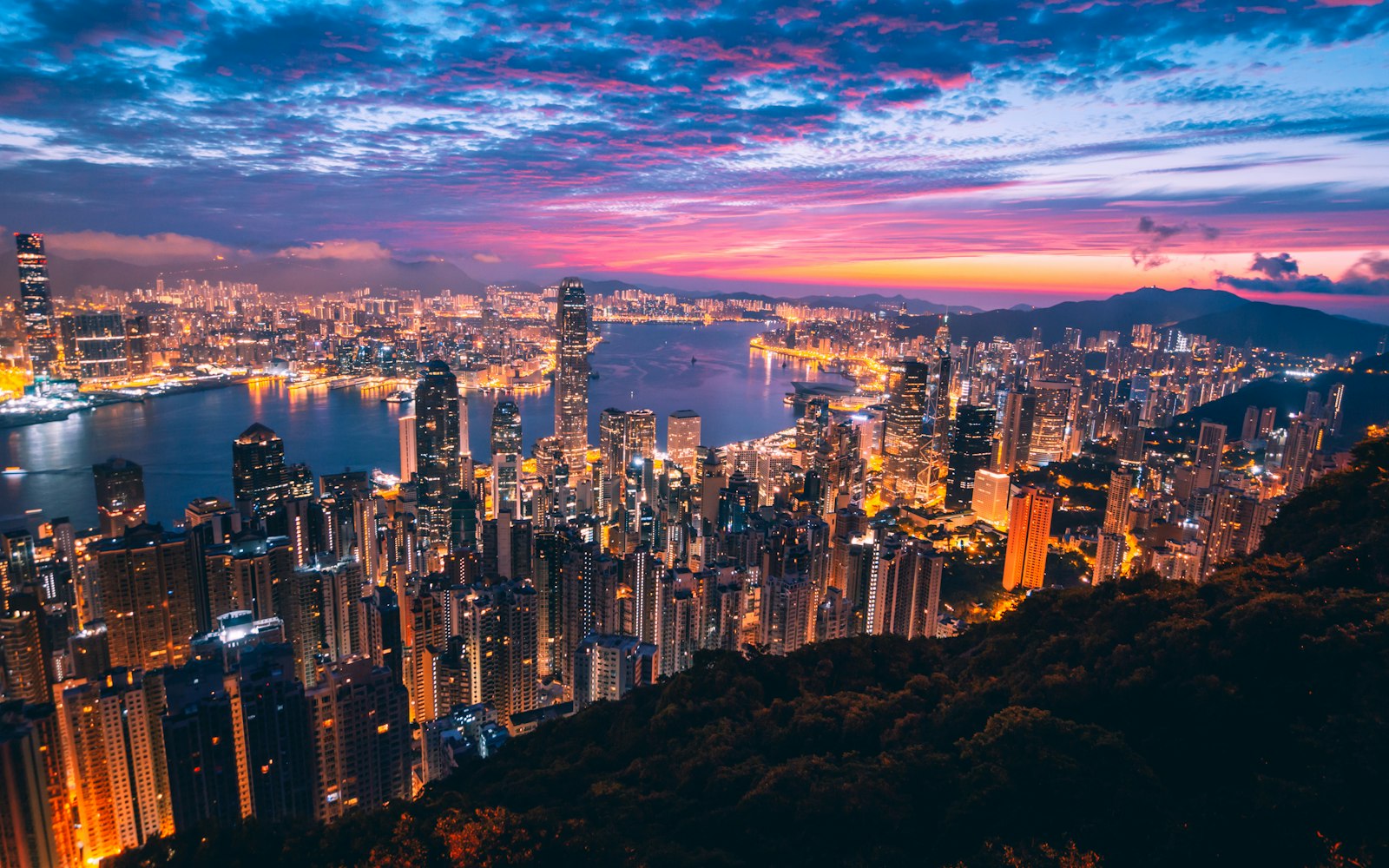
Bottom line: Hong Kong rewards patience — behind the skyscrapers are century-old temples, wet markets and trails into genuine wilderness within twenty minutes of the financial district. This guide covers 18 experiences across viewpoints, food, nature, culture, day trips and nightlife, with 2026 prices and timing.
Hong Kong rewards patience. It looks, on a first pass, like a wall of skyscrapers and a tangle of neon, but the city is layered — vertically and culturally — in a way that only opens up if you slow down and walk it. Grab an Octopus card and start with the harbour.
Quick Reference: Hong Kong’s 18 Best Experiences
| Experience | Category |
|---|---|
| Victoria Peak & the Peak Tram | Iconic Viewpoints |
| The Star Ferry | Iconic Viewpoints |
| A Symphony of Lights | Iconic Viewpoints |
| Dim Sum & Yum Cha | Food & Markets |
| Temple Street Night Market | Food & Markets |
| Cha Chaan Teng & Wet Markets | Food & Markets |
| The Dragon’s Back | Nature & Outdoors |
| The Peak Circle Walk | Nature & Outdoors |
| Beaches: Shek O & Big Wave Bay | Nature & Outdoors |
| Man Mo Temple & Sheung Wan | Culture & History |
| Wong Tai Sin Temple | Culture & History |
| M+ & West Kowloon | Culture & History |
| Lantau & the Tian Tan Buddha | Day Trips |
| Macau | Day Trips |
| Sai Kung & Tai Long Wan | Day Trips |
| Lan Kwai Fong & SoHo | Nightlife |
| Rooftop & Sky Bars | Nightlife |
| A Harbour Junk or Night Walk | Nightlife |
Iconic Viewpoints
1. Victoria Peak & the Peak Tram
The Peak is the obvious first move, and it earns it: from 552 metres, the view down over the harbour and the skyscraper canyon is one of the great urban panoramas anywhere. The historic Peak Tram funicular climbs the slope for HK$28 single or HK$40 return; queues can be long, so go early or near sunset. At the top, skip the paid Sky Terrace and walk the free Lugard Road and Harlech Road loop instead — a flat, shaded 3.5km circle with arguably better, quieter views than the platform. Clear days after rain or a cold front are best; in summer haze, the panorama can disappear entirely, so check visibility before you commit to the climb.
2. The Star Ferry
The Star Ferry has crossed Victoria Harbour since 1888, and at roughly HK$5 it is the best-value sightseeing in the city. The seven-minute hop between Tsim Sha Tsui and Central puts you at water level among the junks, barges and ferries, with the skyline rising on both sides. Sit on the upper deck, go at dusk, and time the return for after dark when the towers light up. It is a working commuter route, not a tour, which is exactly why it is wonderful — no commentary, just the harbour. Pay with your Octopus card or a few coins. Combine it with the waterfront promenade on either side for an easy, cheap, essential first evening.
3. A Symphony of Lights
Every night at 8pm, dozens of buildings on both sides of Victoria Harbour stage a synchronised light-and-sound show — lasers, floodlights and music — billed as the world’s largest permanent light show. It is free. The best vantage points are the Tsim Sha Tsui promenade and the Avenue of Stars on the Kowloon side, looking across at the Hong Kong Island skyline, or from a harbour ferry. It lasts about ten to fifteen minutes. Arrive a little early on weekends to claim a spot at the railing. It is gloriously over the top and a little dated, but seeing the entire skyline perform in unison is a genuinely only-in-Hong-Kong moment, and it costs nothing.
Food & Markets
4. Dim Sum & Yum Cha
Dim sum is Hong Kong’s defining meal and a non-negotiable. “Yum cha” — to drink tea — is the ritual: a sprawling, sociable mid-morning spread of steamed dumplings, barbecue pork buns, rice rolls and a hundred small plates, ordered from trolleys or a ticked menu. You can do it cheaply and brilliantly at an old-school hall like Lin Heung or a Michelin-starred bargain like Tim Ho Wan, where a full feast runs well under HK$150 a head. Go hungry, go in a group if you can, and embrace the controlled chaos. It is best at breakfast or late morning; many of the famous places have queues, so go early or off-peak to avoid a wait.
5. Temple Street Night Market
After dark, Temple Street in Yau Ma Tei comes alive — stalls of knock-off goods, trinkets and street food, fortune tellers, and the open-air “dai pai dong” cooking up clay-pot rice, spicy crab and cheap beer under the lights. It is touristy now but still atmospheric, and the food at the makeshift restaurants is the real draw. Bring cash; most stalls do not take Octopus or cards. Haggle gently if you buy. Go from about 8pm onwards. Pair it with the nearby Yau Ma Tei wholesale fruit market and Tin Hau temple for a fuller wander through old Kowloon. It is gritty, loud and a complete contrast to the polished island side.
6. Cha Chaan Teng & Wet Markets
To eat like a local, find a “cha chaan teng” — the Hong Kong diner-cafe that serves milk tea, pineapple buns, macaroni soup and Western-Chinese hybrids at rock-bottom prices, fast and unceremonious. A full meal is HK$40–70. For raw texture, walk a wet market — Graham Street in Central is the oldest, a 160-year-old street market of produce, fish and butchers wedged between the towers. These are the everyday Hong Kong the skyline hides. The cafes are best at breakfast or for a cheap, no-fuss lunch; the markets are liveliest in the morning. Neither is a “sight” exactly, but both tell you more about how the city actually lives than any observation deck.
Nature & Outdoors
7. The Dragon’s Back
Hong Kong’s most famous hike, and rightly so: the Dragon’s Back ridge in Shek O Country Park serves up a surprisingly wild walk less than an hour from Central. The trail undulates along a forested spine to the 284-metre Shek O Peak, with sweeping views of the south coast, Big Wave Bay and the surrounding islands the whole way. The full route to the beach takes two to three hours and is moderate rather than tough. Take the MTR to Shau Kei Wan then a bus to To Tei Wan. Go in the cooler, drier months (October to March); in summer the humidity makes it punishing. Finish with a swim at Big Wave Bay.
8. The Peak Circle Walk
If the Dragon’s Back is too much, the Lugard Road and Harlech Road loop around Victoria Peak is the gentle alternative — a flat, paved, tree-shaded 3.5km circle that delivers the same legendary harbour views without the paid platform or the crowds. It takes under an hour at a stroll and is suitable for almost anyone. You can reach the start via the Peak Tram or bus. Early morning is quiet and clear; late afternoon catches the light on the towers. It is free, easy and one of the best things you can do up there — most visitors queue for the Sky Terrace and miss this entirely. Wear decent shoes and bring water in warmer months.
9. Beaches: Shek O & Big Wave Bay
People forget Hong Kong has real beaches. On the southeast of Hong Kong Island, Shek O is a laid-back village with a wide public beach and good local seafood, while neighbouring Big Wave Bay draws surfers and is the natural end point of the Dragon’s Back. Both are an easy bus or taxi from Shau Kei Wan MTR and feel a world away from the city. The water is warm and swimmable roughly May to October; the beaches are free, with showers and simple eateries. Weekends get busy with locals; go on a weekday for space. For a slower day combining a hike, a swim and a seafood lunch, this corner of the island is hard to beat.
Culture & History
10. Man Mo Temple & Sheung Wan
In Sheung Wan, the 1847 Man Mo Temple is a dim, incense-thick sanctuary dedicated to the gods of literature and war, with giant coils of incense hanging from the ceiling — one of the most atmospheric spots in the city, and free to enter. Around it, the old district of antique shops, dried-seafood stores and the steep, mural-lined Tai Ping Shan streets rewards an aimless wander. Combine it with the nearby Cat Street antiques market and the PMQ creative hub. Go in the morning before the heat. This is the historic, low-rise heart of Hong Kong Island, and it sits a five-minute walk uphill from the banking towers — the contrast is the point.
11. Wong Tai Sin Temple
Hong Kong’s most popular Taoist temple, Wong Tai Sin in Kowloon, is a riot of colour, smoke and ritual — worshippers shaking bamboo fortune sticks (“kau cim”), ornate halls, a good-luck reputation that draws huge crowds, and a peaceful Chinese garden behind. Entry is free (a small donation is customary). It is busiest and most photogenic during festivals and around Chinese New Year, when the crowds and incense reach fever pitch. Reachable directly by its own MTR station. Allow 45 minutes to an hour. It offers a window into living Chinese folk religion that the museums cannot, and the fortune-telling arcade alongside is a quirky add-on if you want your future read.
12. M+ & West Kowloon
Hong Kong’s cultural centre of gravity has shifted to the West Kowloon Cultural District, where M+ — one of the world’s largest museums of contemporary visual culture — anchors a waterfront arts quarter alongside the Hong Kong Palace Museum. M+ is genuinely world-class, with standard admission around HK$120 and a giant harbour-facing facade that doubles as a screen at night. Add the adjacent Art Park and promenade for skyline views. Allow two to three hours for M+ alone. It is the clearest sign of the city’s ambitions beyond finance, and on a hot or rainy day it is a brilliant, air-conditioned way to spend an afternoon. Book online to skip the queue at peak times.
Day Trips
13. Lantau & the Tian Tan Buddha
Lantau Island, home to the airport and Disneyland, is also where you find the Big Buddha. Ride the Ngong Ping 360 cable car — a 25-minute glide over mountains and sea, HK$295 return standard or HK$365 for the glass-floored Crystal Cabin — to the 34-metre bronze Tian Tan Buddha, the Po Lin Monastery and its excellent vegetarian hall. Climb the 268 steps to the Buddha for the view. Add the old fishing village of Tai O, with its stilt houses, for a fuller day. Go early to beat both crowds and afternoon cloud on the peak. On a clear day it is spectacular; in low cloud the cable car can be a white-out, so check conditions first.
14. Macau
An hour from Hong Kong by ferry (or via the world’s longest sea bridge), Macau is a genuine day trip across an international border — passport required, with formalities each way. The draw is the UNESCO-listed old town: a Portuguese-colonial tangle of pastel churches, the ruins of St Paul’s, cobbled squares and a Macanese food culture found nowhere else, all wrapped around the glittering casino strip of the Cotai. Skip the gambling and walk the historic centre and the back lanes of Taipa for egg tarts and pork-chop buns. Go for a full day given the border time. It is a strange, compelling collision of Iberian heritage and Vegas excess that makes for a complete change of pace from Hong Kong.
15. Sai Kung & Tai Long Wan
For the wild side of Hong Kong, head to Sai Kung in the New Territories — a low-rise seaside town of seafood restaurants and fishing boats that is the gateway to the city’s best beaches. The Tai Long Wan (“Big Wave Bay”) trail leads to a string of remote, gorgeous white-sand beaches backed by green hills, reachable on foot or by hired sampan, with simple cafes at Sai Wan and Ham Tin. The volcanic rock formations of the UNESCO Global Geopark are offshore. It is a full day and a proper escape from the towers. Go in the cooler months for the hiking, or in summer for the swimming. Sai Kung town alone, for a seafood lunch by the water, is worth the trip.
Nightlife
16. Lan Kwai Fong & SoHo
Hong Kong’s nightlife heart is the cluster of steep lanes above Central — Lan Kwai Fong (LKF) for raucous, spilling-onto-the-street bars and clubs, and the quieter, more grown-up SoHo above it for cocktail bars and global restaurants, reached by the world’s longest outdoor escalator. It is busy, international and runs late, especially Thursday to Saturday. Drinks are not cheap — expect HK$90–140 for a cocktail — but the energy is unmatched and the bar-hopping is easy on foot. Start in SoHo for a civilised drink and dinner, then drop down into LKF if you want the chaos. It is the easiest place in the city to fall into a night out.
17. Rooftop & Sky Bars
In a city this vertical, the view from a bar is the main event. Ozone at the Ritz-Carlton, on the 118th floor of the ICC, is among the highest bars on earth; Aqua, Wooloomooloo and a dozen others offer harbour panoramas with a drink in hand. Expect minimum spends and HK$120–180 cocktails at the headline venues — you are paying for the altitude. Go at dusk to watch the towers light up and, if you time it right, catch the Symphony of Lights from above. Dress codes apply at the smarter rooms. It is an expensive way to drink, but standing 400-plus metres up with the whole harbour glittering below is a quintessential Hong Kong splurge.
18. A Harbour Junk or Night Walk
To end on the water, charter or join a traditional red-sail junk boat — the Aqua Luna is the iconic one — for a 45-minute evening cruise across the harbour, drink in hand, under the lit-up skyline; tickets run around HK$230–290. Cheaper and just as memorable: walk the Tsim Sha Tsui waterfront promenade and the Avenue of Stars after dark, with the full Hong Kong Island skyline laid out across the water and the Star Ferry chugging past. Either way, the harbour at night is the city at its most cinematic. It is the perfect, low-key counterpoint to a day of hiking, dumplings and temples — and the ferry option costs almost nothing.
Practical Tips
Transport: buy an Octopus card the moment you arrive — it works on the MTR, buses, trams, ferries and the Airport Express, and at over 180,000 shops and convenience stores. The MTR is fast, cheap and the backbone of any visit. Note that night markets and street-food stalls are usually cash-only, so carry some. When to go: autumn (October to early December) is the sweet spot — clear, dry, 22–28°C. Avoid the typhoon season risk and the heavy rain of May to September, when humidity is intense and a “T8” storm signal can shut the city down for a day. Winter is mild and dry; spring is grey and damp. Heat and humidity are the real summer challenge — pace outdoor plans for morning and evening and duck into air-conditioned museums and malls in between.
Insurance: standard holiday cover is a poor fit for the long, mobile stays Hong Kong attracts, and the city’s private healthcare is excellent but expensive.
Travel Insurance for Hong Kong
SafetyWing Nomad Insurance is designed for long, mobile stays — a monthly subscription that follows you across borders, including day trips into Macau and mainland China.
• Where to stay in Hong Kong
• Hong Kong digital nomad guide
• Hong Kong visa guide
• Cost of living in Hong Kong
Frequently Asked Questions
What’s the best time of year to visit Hong Kong?
Autumn (October to early December) is the sweet spot — clear, dry, 22–28°C, avoiding both typhoon risk and the heavy humidity of May to September.
Do I need cash?
Yes, for night markets and street-food stalls — most are cash-only, though the Octopus card covers MTR, buses, trams, ferries and over 180,000 shops.
What’s the best free thing to do?
The nightly Symphony of Lights show at 8pm, best viewed from the Tsim Sha Tsui promenade, or the Lugard Road/Harlech Road loop around Victoria Peak.
Is Macau worth a day trip?
Yes — about an hour away by ferry, with a UNESCO-listed Portuguese-colonial old town alongside the Cotai casino strip; passport required.