
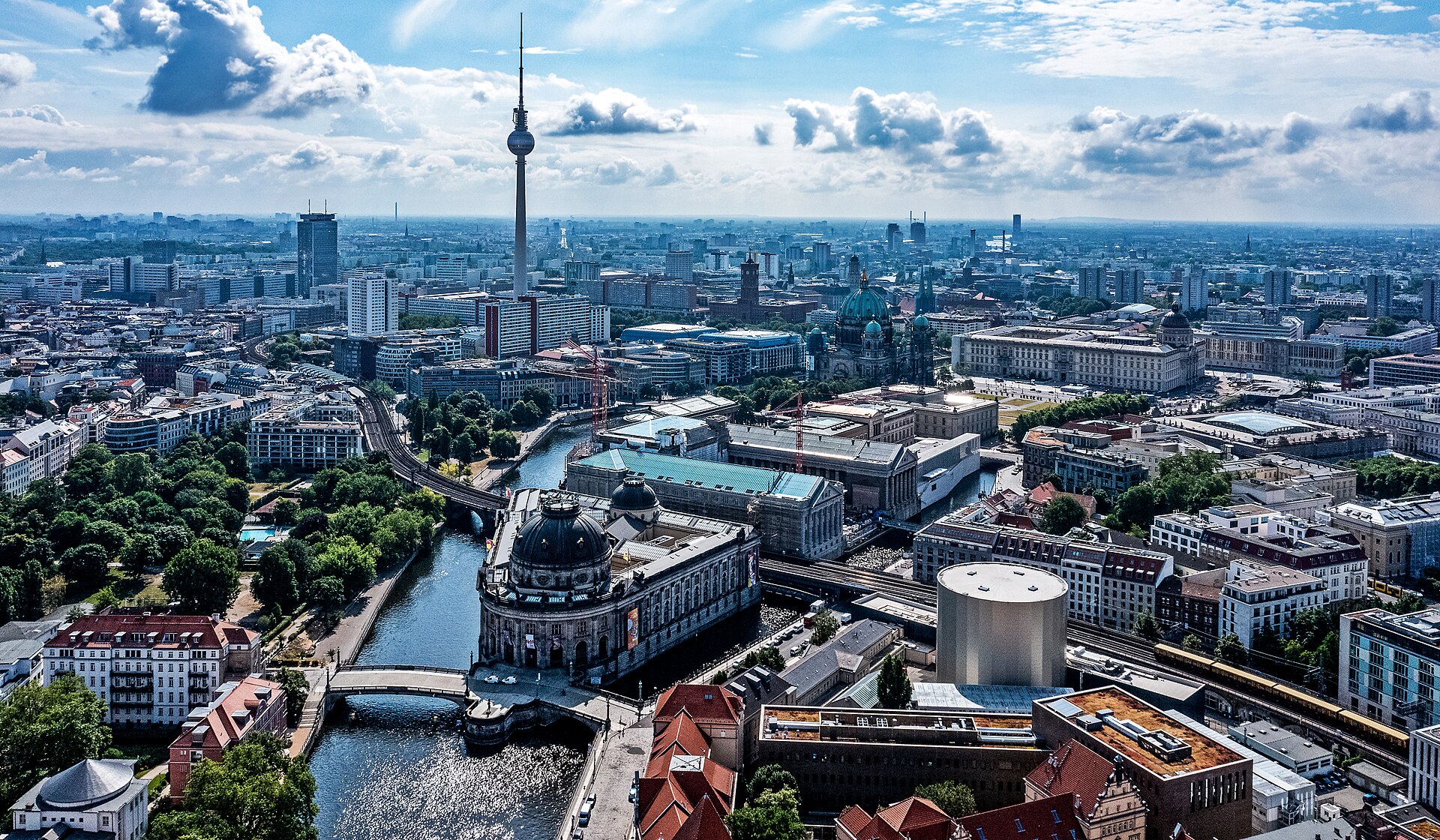
Berlin has one of the largest and longest-established freelancer and remote worker communities in Europe, built on decades of low-cost living attracting creatives and, more recently, tech workers.
Wifi and Connectivity
Germany’s overall internet infrastructure has historically lagged some other Western European countries in fiber rollout, though Berlin itself is generally well-served, particularly in newer buildings. Speeds are solid for remote work in most central districts, but it’s worth checking a specific building’s connection before signing a longer lease, as older buildings can vary.
SIM Cards and eSIMs
Telekom, Vodafone, and O2 are the three major carriers, with prepaid SIMs available at shops and kiosks across the city. Discount MVNOs like congstar (Telekom network) or Aldi Talk offer solid value. eSIMs from Airalo or Holafly work well for shorter stays and can be set up before arrival.
Coworking Spaces
Berlin has one of the most established coworking scenes in Europe, a legacy of its long history as a freelancer hub. Betahaus in Kreuzberg is a well-known original, alongside newer options like St. Oberholz (which started as a cafe and became a coworking institution), Mindspace, and WeWork locations across Mitte and Kreuzberg. Day passes typically run €15–25, with monthly memberships from €150–250.
Best Areas for Remote Workers
Kreuzberg and Neukölln have the highest density of coworking spaces and laptop-friendly cafes combined with Berlin’s strongest international remote-worker community. Prenzlauer Berg suits those wanting a calmer, more residential work environment.
Time Zone Considerations
Germany uses Central European Time (UTC+1, UTC+2 in summer), the same zone as most of continental Europe and just 1 hour ahead of the UK — convenient for overlapping with European clients and colleagues, with a challenging but manageable partial overlap with US East Coast mornings.
The Bottom Line
Berlin remains one of the best-value major Western European cities for remote workers, combining a deep freelancer culture, strong coworking infrastructure, and a genuinely international community, at a cost still below London or Paris.
Frequently Asked Questions
Is Berlin still a good value compared to other European nomad hubs?
Yes, though the gap with cities like Lisbon has narrowed — Berlin remains noticeably cheaper than London, Paris, or Amsterdam.
How established is the freelancer community?
Very — Berlin has one of the longest-running freelance and creative communities in Europe, well before “digital nomad” became a common term, giving it a genuinely mature support ecosystem.
Cost of Working From Berlin
Between a coworking membership and reliable home broadband, budget €150–250/month on top of general living costs for a solid remote work setup — reasonable relative to Berlin’s overall cost level, still below London or Paris equivalents.
Community and Meetups
Berlin has one of the longest-running freelancer and startup communities in Europe, well-established even before “digital nomad” became common terminology — coworking-hosted events, tech meetups, and a broad expat social scene make it easy to build a network.
Language and Daily Life
English is widely spoken in central Berlin’s international business and creative circles, though German is genuinely useful (and often necessary) for bureaucracy, contracts, and life outside the most international-facing neighbourhoods.
Practical Daily Tools
- The BVG app handles public transport navigation across U-Bahn, S-Bahn, trams, and buses reliably.
- N26 is a popular app-based bank for quick account setup as a newcomer.
- Lieferando is the dominant food delivery app in Berlin and across Germany.
The Verdict for Different Nomad Types
Berlin suits remote workers who want a serious, established freelance culture and strong value relative to Western Europe’s other major capitals — a particularly good fit for creative and tech professionals, less so for those wanting maximum English-language ease without any German at all.