
 Bali Activities Guide · 2026
What to Do in Bali: An Honest Guide
Bali is one of the most activity-dense destinations in the world. The challenge isn’t finding things to do — it’s sorting the genuinely worth-it from the tourist trap. This guide is blunt about both.
Surfing
The surf in Bali is why many people come and why many of them never leave. The island sits at the intersection of two major swells, producing consistent waves year-round on both coasts. West coast (Kuta, Seminyak, Canggu, Uluwatu) fires best May–October on southwest swells. East coast (Keramas, Sanur, Amed) works best in the wet season when east swells run.
Beginners: Kuta Beach is the classic learn-to-surf spot — mellow whitewater, wall-to-wall instructors, boards to rent from Rp50,000/hour. The instruction quality is inconsistent; ask for a recommendation from your accommodation rather than accepting whoever approaches you on the beach. Seminyak and Batu Bolong (Canggu) are less crowded alternatives for beginners.
Intermediate to advanced: Uluwatu is the benchmark — a long left-hander breaking over a shallow reef, accessible by paddling through a cave at the cliff base. Consistent, powerful, and crowded. Padang Padang is a barrelling left that requires a good standard to survive enjoyably. Keramas on the east coast is a high-performance right-hander that hosts the WSL Championship Tour.
Temples — What’s Worth Seeing
Bali has over 20,000 temples. Most tourists see three. Here’s which ones are actually worth the effort:
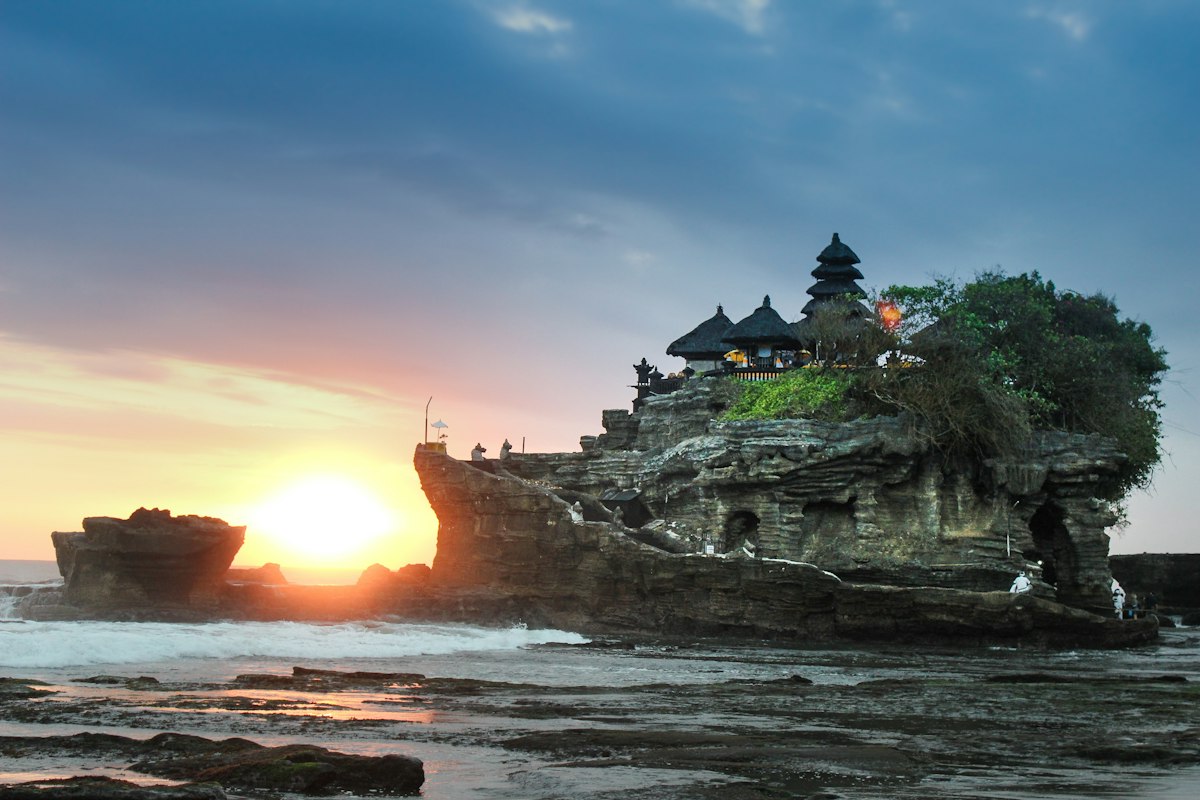
Tanah Lot — A sea temple on a coastal rock, photographed at sunset from the clifftop. The temple itself is not accessible to non-Hindus, so you’re essentially paying Rp60,000 to photograph it from 50 metres away. Worth it once; the setting is genuinely dramatic.
Uluwatu — A clifftop temple at the southwestern tip of the Bukit Peninsula, 70 metres above the ocean. The kecak fire dance performance at sunset here is one of the genuinely memorable experiences on the island — an outdoor amphitheatre, a chorus of 100 men chanting, and a backdrop of the Indian Ocean. Tickets are Rp150,000 and include temple access. Book ahead in high season.
Tirta Empul (Ubud) — A holy spring water temple where Balinese Hindus come to purify themselves in the sacred pools. Non-Hindus can participate in the ritual with appropriate dress (sarong, available to borrow). One of the most authentically spiritual experiences available to tourists on the island.
Besakih — The Mother Temple on the slopes of Mount Agung, the most sacred site in Bali. The scale is extraordinary — over 80 separate temples spread across the mountainside. The access situation has improved but bring a local guide to navigate respectfully.
Volcano Trekking
Mount Batur (1,717m) is the accessible option — a 2am start, 2-hour climb to the summit, arriving for sunrise over the caldera. The hike is well-maintained and does not require serious fitness. Guides are mandatory and enforced at the trailhead; the fixed price is around Rp350,000–450,000 per person including breakfast cooked on the volcanic steam at the summit. Book the night before through your accommodation.
Mount Agung (3,031m) is a different proposition entirely. The highest point on the island and the most sacred mountain in Bali, the summit hike takes 6–8 hours and involves sustained steep climbing on loose volcanic rock. It is physically demanding and should not be attempted without reasonable fitness. A local guide is essential — the mountain is active and eruption alerts change the access situation periodically.
The Nusa Islands
Three islands southeast of Bali, accessible by fast boat from Sanur (30–45 minutes, around Rp200,000 each way). Nusa Penida has become one of the most photographed places in Indonesia — Kelingking Beach (the T-Rex cliff), Angel’s Billabong, and Broken Beach are legitimately spectacular. The road infrastructure is still rough; hire a local driver on the island rather than renting a scooter unless you’re comfortable on steep, uneven tracks. Snorkelling at Crystal Bay and Manta Point (manta ray encounters May–October) is excellent. Book the boat and a driver package together from Sanur — it’s cheaper and easier.
Yoga and Wellness
Ubud is one of the genuine global centres of yoga. The Yoga Barn runs 8–12 classes daily across multiple disciplines — drop-in is Rp150,000–200,000. The quality varies by teacher; check the schedule and teacher profiles rather than just showing up. Radiantly Alive is more focused on serious practitioners. For wellness beyond yoga: Bali’s traditional massage (Balinese massage) is excellent and genuinely therapeutic — budget Rp100,000–150,000 for a full hour at a reputable spa in Ubud or Seminyak.
Planning Your Visit?
Get the free Bali Arrival Checklist — 30 things to do before and after you land.
Download Free