
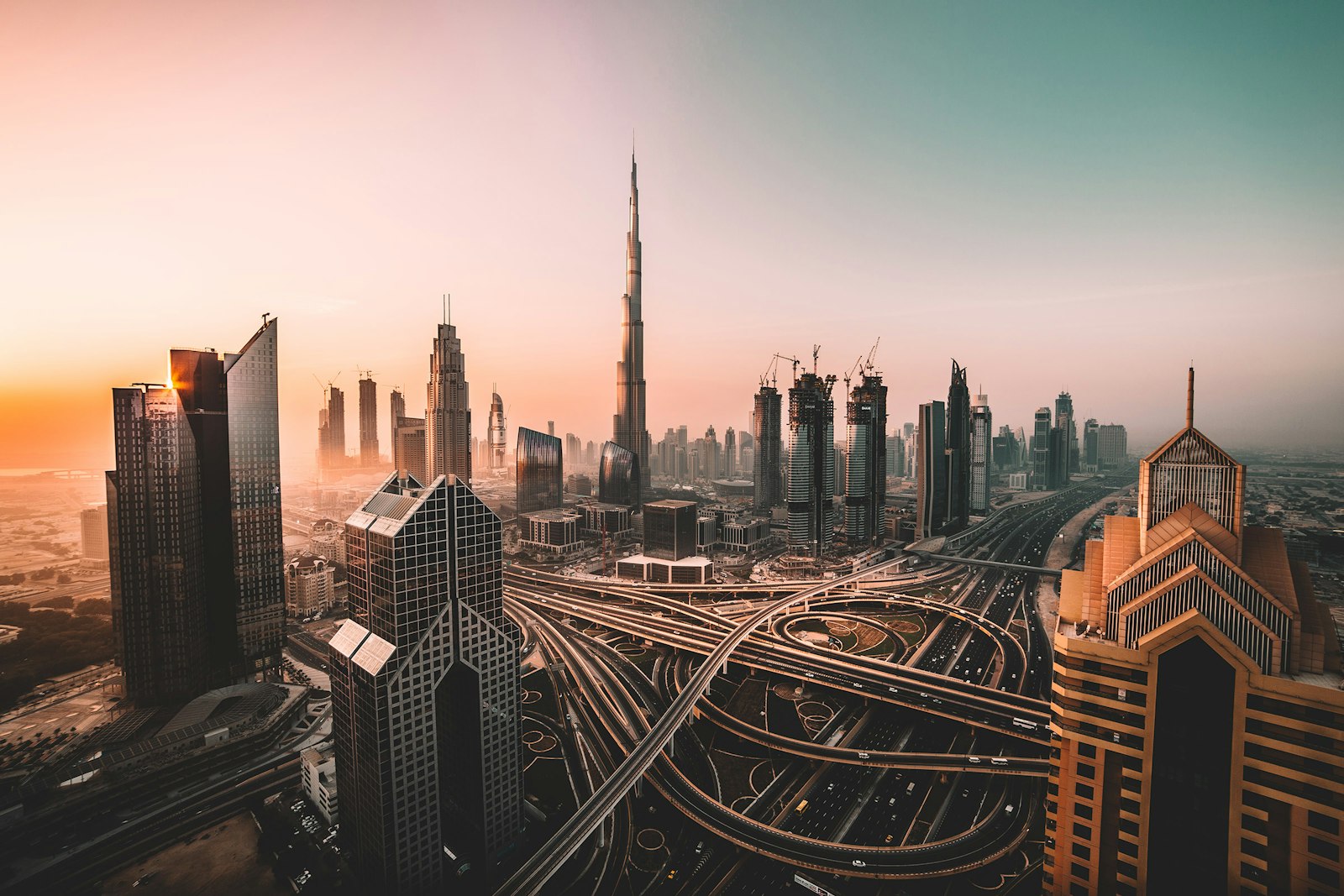
Bottom line: Dubai rewards long-stay visitors who go beyond the Burj Khalifa — an evening desert safari (from AED 99), free public beaches, the flamingo-filled Ras Al Khor sanctuary, and day trips to Hatta, Sharjah, and Al Ain. From May–September, schedule anything outdoors for sunrise or after sunset — the heat isn’t a suggestion.
Dubai gets written off as a soulless luxury layover, and that reputation is half-earned. But spend real time here and a more interesting city shows up: world-record towers next to 1960s wind-tower houses, Pakistani canteens a five-minute walk from Michelin tables, desert that starts where the motorway ends. This is a list for people who actually have time in Dubai — long-stay visitors, expats settling in, nomads waiting out a winter. We have skipped the obvious traps where they are not worth it and kept the ones that are, with real 2026 prices, locations and the timing that matters in a city where the heat dictates everything from May to September.
Quick Reference: Dubai’s Top 20 Experiences
| Experience | Category |
|---|---|
| 1. Evening Desert Safari | Outdoors & Desert |
| 2. Kite Beach & JBR Beach | Outdoors & Desert |
| 3. Dubai Marina Walk & Dhow Cruise | Outdoors & Desert |
| 4. Ras Al Khor Wildlife Sanctuary | Outdoors & Desert |
| 5. Al Fahidi Historical District | Culture & History |
| 6. The Gold & Spice Souks | Culture & History |
| 7. Museum of the Future | Culture & History |
| 8. Dubai Frame | Culture & History |
| 9. Friday Brunch | Food & Drink |
| 10. Old Dubai Street Food | Food & Drink |
| 11. Time Out Market Dubai | Food & Drink |
| 12. Arabian Tea House | Food & Drink |
| 13. Burj Khalifa: At The Top | Nightlife & Entertainment |
| 14. The Dubai Fountain | Nightlife & Entertainment |
| 15. Rooftop & Sky Bars | Nightlife & Entertainment |
| 16. La Perle & Indoor Entertainment | Nightlife & Entertainment |
| 17. Hatta | Day Trips |
| 18. Abu Dhabi & Sheikh Zayed Grand Mosque | Day Trips |
| 19. Sharjah | Day Trips |
| 20. Al Ain | Day Trips |
Outdoors & Desert
1. Evening Desert Safari
The desert is the one Dubai experience that lives up to the marketing. A standard shared evening safari runs from around AED 99 per person and includes dune bashing, a camel ride, sandboarding and a BBQ dinner with live entertainment at a desert camp. VIP packages sit at AED 129–149, and overnight camps with stargazing and breakfast are about AED 349. Go in the cooler months (November–March) and take the late-afternoon departure so you are on the dunes for sunset. Book a smaller operator rather than the big bus tours if you can — the camps are quieter and the driving is better.
2. Kite Beach & JBR Beach
Dubai’s public beaches are free, clean and genuinely good. Kite Beach (Umm Suqeim) is the local favourite — a running track, food trucks, watersports, and a clear view of the Burj Al Arab. JBR’s The Beach is more built-up, with restaurants and a mall behind it. Both have showers and changing facilities. Mornings before 10am or evenings after 4pm are the only sensible windows from June to September, when sand and water both get punishing. In winter, a full beach day is one of the best free things you can do in the city.
3. Dubai Marina Walk & Dhow Cruise
The Marina is Dubai’s most walkable district — a 7km promenade ringed by towers, yachts and cafes. It is best at night when the heat drops and the skyline lights up. A traditional dhow dinner cruise here runs roughly AED 120–200 depending on operator and whether dinner is included; the cheaper move is simply walking the loop and stopping for shisha or coffee. From the Marina you can also hop the tram one stop to JBR. For where to base yourself near here, see our Dubai neighbourhoods guide.
4. Ras Al Khor Wildlife Sanctuary
Few visitors know Dubai has a flamingo lagoon ten minutes from Downtown. Ras Al Khor is a protected wetland at the top of Dubai Creek with free public hides looking out over hundreds of greater flamingos, plus herons and waders. Entry is free and it is open during daylight hours, usually closed on Fridays — check before you go. Bring binoculars; the birds keep their distance. Best in the cooler months and early morning when birds are active and the light is good. It is a quiet, strange counterpoint to the skyscrapers and takes about an hour.
Culture & History
5. Al Fahidi Historical District
Al Fahidi (Bastakiya) is the closest Dubai gets to an old town: restored 19th-century coral-and-gypsum houses, wind towers, art galleries and courtyard cafes in a low-rise warren near the Creek. Wandering is free. Stop at the Sheikh Mohammed Centre for Cultural Understanding for an “open doors, open minds” cultural meal or mosque visit if the timing works. From here, cross Dubai Creek on an abra (traditional wooden ferry) for AED 1 — one of the best-value experiences in the city — to reach the souks in Deira. Go in the morning before the heat and the tour groups.
6. The Gold & Spice Souks
Across the Creek in Deira, the old souks are still working markets, not museum pieces. The Gold Souk’s windows hold a genuinely staggering amount of jewellery; the nearby Spice Souk is a narrow lane of saffron, frankincense and dried lemons. Entry is free; haggling is expected if you buy, and gold is sold by weight at the day’s rate plus a making charge. It is busiest and best in the evening. Treat the persistent “copy watch” touts with a firm no. Combine it with the abra crossing and Al Fahidi for a half-day in old Dubai.
7. Museum of the Future
The Museum of the Future — that calligraphy-wrapped silver torus on Sheikh Zayed Road — is the rare Dubai attraction that is genuinely well done. It is part design exhibition, part immersive experience, exploring space, ecology and wellbeing across themed floors. Tickets are AED 149–159 for adults; children under four and people of determination enter free, and during 2026’s “Year of the Family” one child under 12 goes free with each paying adult between 16 March and 15 September. It frequently sells out, so book a timed slot online days ahead. Allow about 90 minutes.
8. Dubai Frame
The Dubai Frame is exactly what it sounds like: a 150-metre golden picture frame in Zabeel Park, with old Dubai on one side and new Dubai on the other. A glass-floored sky bridge connects the two legs. Admission is AED 50 for adults and AED 20 for children aged 3–12, with under-threes free. It is a quick visit — 45 minutes to an hour — and works best in late afternoon when the light softens and you can see both skylines clearly. Slightly gimmicky, but the view genuinely frames the city’s two eras.
Food & Drink
9. Friday Brunch
Friday (and increasingly Saturday) brunch is a Dubai institution — a long, sociable, all-you-can-eat-and-drink affair that runs from roughly midday to mid-afternoon. Prices range from about AED 250 for a solid mid-range spread to AED 500+ at the marquee hotel venues, usually with soft and house-beverage packages. It is the city’s main social ritual for residents. Book ahead for anywhere good; the best venues fill days in advance. Pace yourself — these run for hours. It is the one splurge most expats budget for, and a fast way to understand how the city actually socialises.
10. Old Dubai Street Food
Dubai’s best food is not in the towers — it is in the canteens of Bur Dubai, Deira and Al Rigga, where the city’s South Asian and Arab communities eat. Ravi in Satwa (Pakistani, open since 1978) is the legend, with full meals under AED 30. Al Ustad Special Kebab does charcoal-grilled Iranian kebabs in a wonderfully cluttered Bur Dubai room. Add a karak chai for a couple of dirhams from any cafeteria. This is where you eat well for almost nothing — see our Dubai cost of living guide for how far a food budget really stretches.
11. Time Out Market Dubai
Time Out Market in Souk Al Bahar puts a curated set of Dubai’s better restaurants and chefs under one roof, right at the foot of the Burj Khalifa with terrace views over the fountain. It is a good-value way to sample several kitchens without committing to a full sit-down dinner — most dishes land in the AED 40–90 range. It works well in the evening before or after the fountain show. Air-conditioned and casual, it is also a reliable summer option when eating outdoors is off the table. Expect it to be busy on weekend nights.
12. Arabian Tea House
Tucked into an Al Fahidi courtyard under a white pergola and bougainvillea, the Arabian Tea House is the most pleasant place in old Dubai to slow down. The Emirati breakfast — balaleet, chickpea stew, fresh khameer bread and dates — runs around AED 60–90 and is a proper introduction to local food, which is otherwise hard to find in restaurant form. There is a long menu of teas. Go mid-morning after walking Al Fahidi, before it fills up. It is touristy but genuinely good, and one of the few spots serving authentic Emirati dishes in a relaxed setting.
Nightlife & Entertainment
13. Burj Khalifa: At The Top
Yes, it is the obvious one — and at 828 metres it earns it. “At The Top” on level 124/125 costs AED 149–199 depending on whether you book a prime sunset slot; the higher SKY experience on level 148 runs up to around AED 524. Book online in advance for any decent saving and to lock in a time; non-prime hours are cheaper. Observation decks stay open late, with last entry around 11pm (SKY closes earlier, last entry near 9pm). Sunset is spectacular but sells out first. For the view without the ticket, book a table at a high-floor bar instead.
14. The Dubai Fountain
The Dubai Fountain, set on the 12-hectare lake between the Burj Khalifa and Dubai Mall, is free and genuinely worth timing your evening around. Choreographed water, light and music shows run every 30 minutes from around 6pm to 11pm, each lasting a few minutes. The best free vantage points are the waterfront promenade and the Souk Al Bahar bridge; you can also pay for a small abra boat ride on the lake to watch from the water. Arrive 10–15 minutes early on weekend evenings to get a spot at the railing. Simple, but it still lands.
15. Rooftop & Sky Bars
Dubai’s rooftop bar scene is its real nightlife. CÉ LA VI atop Address Sky View, SoHo Garden, and various Marina and DIFC rooftops give you Burj Khalifa views with a drink in hand — often cheaper than a Burj Khalifa ticket once you factor in the experience. Expect minimum spends or AED 80–120 cocktails at the headline venues. Alcohol is legal in licensed hotel and venue bars; it is the public spaces where rules apply. Dress codes are enforced. Many venues do ladies’ nights midweek with free drinks for women, a long-standing Dubai quirk that keeps midweek bars busy.
16. La Perle & Indoor Entertainment
When it is too hot to move, Dubai’s indoor entertainment is world-class. La Perle by Dragone is a resident aqua-theatre show at Al Habtoor City, with tickets from around AED 200. IMG Worlds of Adventure is the planet’s largest indoor theme park; Ski Dubai puts a real snow slope inside Mall of the Emirates. Any of these turns a 45°C afternoon into a non-issue. The malls themselves — Dubai Mall above all — are destinations in their own right, with aquariums, ice rinks and cinemas. In summer, plan your days around air conditioning rather than fighting it.
Day Trips
17. Hatta
Hatta is Dubai’s mountain enclave, about 130km and 1.5 hours from the city via the E44 (carry your passport — the road skirts Omani territory). The draw is the turquoise Hatta Dam, where you can kayak or pedal-boat, plus the free Hatta Heritage Village and the Wadi Hub adventure park with mountain biking and zip-lines. Group day tours start around AED 149; self-driving is easy and cheaper if you have a car. Go in winter — it is cooler at altitude but still a desert-mountain climate. A full day covers the dam, village and a hike or ride.
18. Abu Dhabi & Sheikh Zayed Grand Mosque
The UAE capital is about 1.5 hours away and makes a comfortable day trip. The headline is the Sheikh Zayed Grand Mosque — a vast white-marble masterpiece that is free to enter, with a strict modest dress code (robes provided) and timed visitor slots. Add Qasr Al Watan, the Louvre Abu Dhabi and the Corniche. Group tours run around AED 200–250 including transport; buses from Dubai are far cheaper if you go independently. Go early to beat both heat and crowds at the mosque, and dress conservatively from the outset to avoid the queue for robes.
19. Sharjah
Twenty minutes from Dubai but a different mood, Sharjah is the UAE’s cultural capital and a UNESCO-recognised one at that. The restored Heart of Sharjah district, the Sharjah Art Foundation spaces, the Museum of Islamic Civilization and the Blue Souk reward a half-day of wandering, with most museums charging only a few dirhams. Note that Sharjah is a dry emirate — no alcohol — and somewhat more conservative, so dress accordingly. Traffic on the Dubai–Sharjah corridor is brutal at rush hour, so go mid-morning and leave before 4pm. It is the easiest way to see a quieter, older Emirati city.
20. Al Ain
Al Ain, the “Garden City” on the Omani border, is a 1.5–2 hour drive inland and a genuine change of pace: UNESCO-listed oases with working falaj irrigation channels, the Al Ain Oasis (free), Jahili Fort, a lively camel market and Jebel Hafeet, the dramatic mountain road that climbs to a summit viewpoint. It is greener, calmer and more traditional than the coast. You really need a car for the day. Cooler than Dubai in winter and worth the drive for anyone who wants to see the UAE beyond the skyline. Pack water and fuel up before the Jebel Hafeet climb.
Practical Tips
Getting around: the Metro is cheap, clean and air-conditioned but does not reach everywhere; pair it with Careem or Uber, which are affordable and reliable. Buy a Nol card for Metro, tram and buses. Timing: from May to September, do anything outdoors at sunrise or after sunset and live indoors in between — the heat is not a suggestion. November to March is the season for everything outside. Dress: Dubai is liberal by regional standards but still the UAE — cover shoulders and knees at mosques, souks and government buildings, and keep beachwear to the beach. Alcohol is fine in licensed venues, not in public.
Insurance: most travel policies are written for short holidays, not the long, mobile stays Dubai attracts. SafetyWing’s Nomad Insurance is built for expats and long-stay travellers — it covers you across countries, can be started while you are already abroad, and runs on a simple monthly subscription, which suits anyone basing themselves in Dubai for a season rather than a week. Whatever you choose, do not rely on a credit-card policy here; private healthcare is excellent but expensive, and you want cover that travels with you. For the full picture on living costs, see our Dubai cost of living guide, and for working from the city our Dubai digital nomad guide.
• Dubai cost of living guide
• Dubai digital nomad guide
• Dubai neighbourhoods guide
• Dubai safety guide
• Things to do in Bali
Frequently Asked Questions
What’s the best free thing to do in Dubai?
Kite Beach or JBR Beach — both are free, clean, and have showers/changing facilities, plus Ras Al Khor Wildlife Sanctuary for free flamingo-watching near Downtown.
How much does a Dubai desert safari cost?
A standard shared evening safari runs from around AED 99 per person; VIP packages are AED 129–149, and overnight camps with stargazing are about AED 349.
What day trips are possible from Dubai?
Hatta, Abu Dhabi (Sheikh Zayed Grand Mosque), Sharjah, and Al Ain are all reachable as day trips, each 1–2 hours by car.
When’s the best time to do outdoor activities in Dubai?
November to March for full days outside; from May to September, stick to sunrise or after sunset — daytime heat is genuinely punishing.