
Kuala Lumpur rewards visitors who give it time. At first glance it’s a city of glittering towers and mega-malls, but spend a week here and you find a layered, multicultural capital — Malay, Chinese and Indian influences tangled together over street food, temples, colonial-era streets and some of the best-value living in Southeast Asia. This is an honest, practical run-through of the 18 experiences worth your time in 2026, organised by type, with real MYR prices and the logistics that actually matter. Prices and hours shift, so treat figures as a guide and check before you go — but this is what a well-spent week or two in KL actually looks like.
Quick Reference: KL’s Top Experiences
| Experience | Category |
|---|---|
| Petronas Twin Towers | Iconic Landmarks |
| Menara KL (KL Tower) | Iconic Landmarks |
| Merdeka 118 | Iconic Landmarks |
| KLCC Park | Food & Markets |
| Jalan Alor | Food & Markets |
| Central Market | Food & Markets |
| Petaling Street (Chinatown) | Food & Markets |
| Batu Caves | Nature & Day Trips |
| Perdana Botanical Gardens & KL Bird Park | Nature & Day Trips |
| Genting Highlands (day trip) | Nature & Day Trips |
| National Mosque (Masjid Negara) | Culture & Religion |
| Islamic Arts Museum Malaysia | Culture & Religion |
| Thean Hou Temple | Culture & Religion |
| Changkat Bukit Bintang | Nightlife & Entertainment |
| Heli Lounge Bar | Nightlife & Entertainment |
| Aquaria KLCC | Nightlife & Entertainment |
| Bukit Bintang malls | Shopping |
| Bangsar & Mid Valley | Shopping |
When to Visit and How Long to Stay
KL is a year-round destination. So close to the equator, it has no real seasons — just consistently hot, humid days around 30–33°C with afternoon rain possible in any month. The drier, slightly more comfortable stretch runs roughly from May to July, while the wetter months cluster late in the year, though showers are usually short and rarely derail a day. The bigger thing to plan around is the festival calendar: Thaipusam at Batu Caves (January or February) and Chinese New Year transform the city, while Ramadan brings spectacular night food bazaars across town.
For a focused trip, three full days is enough to cover the headline sights, eat well and fit in Batu Caves. Five days lets you slow down, add a day trip to Genting or a deep dive into the Bangsar and Chinatown neighbourhoods, and actually settle into the city’s rhythm. KL also makes an excellent base for longer stays — it’s cheap, well connected and visa-friendly — which is why so many digital nomads end up lingering far longer than they first planned.
Iconic Landmarks
Petronas Twin Towers
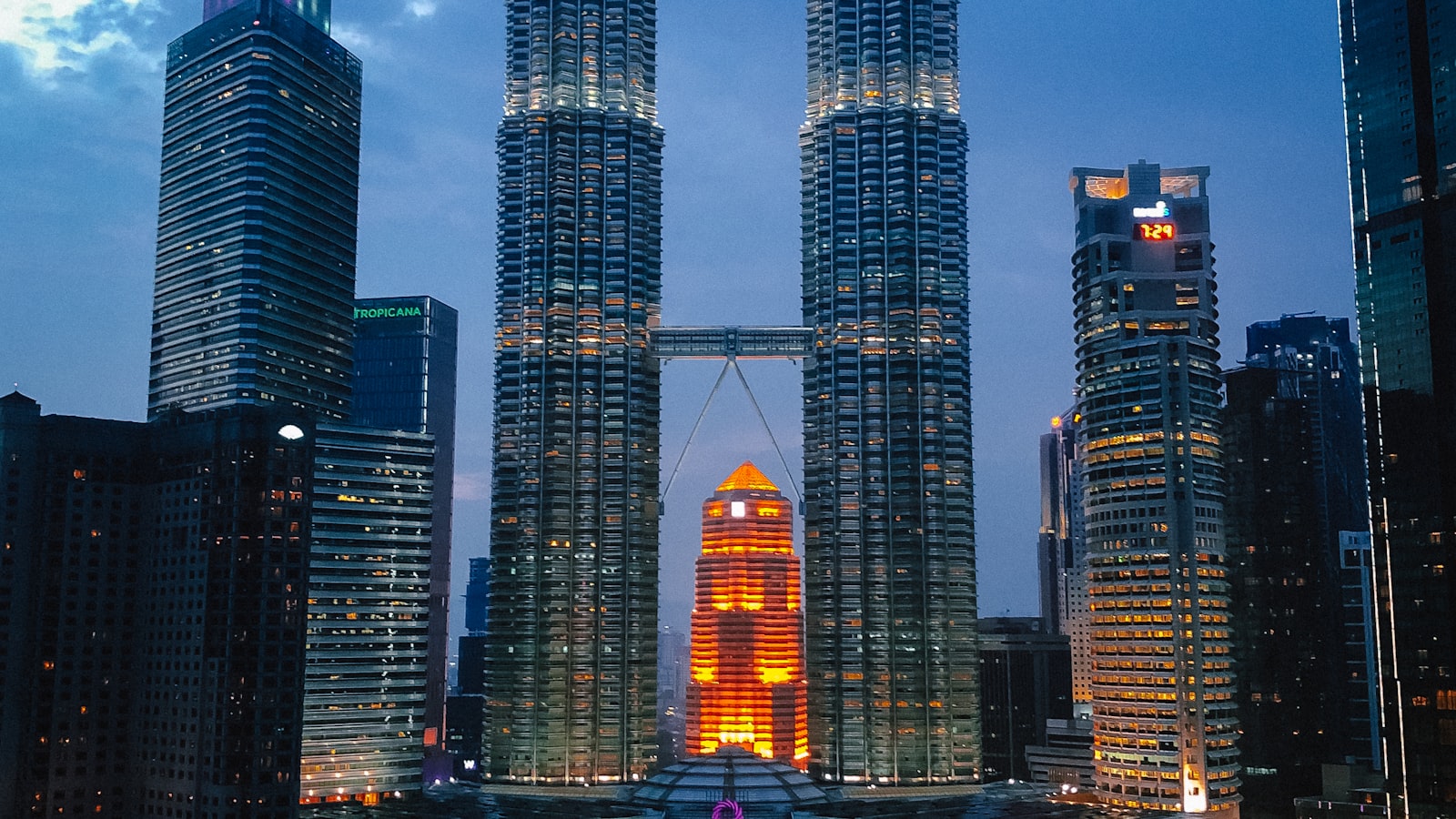
The postcard shot of KL, and still worth it. The 88-storey towers are free to admire from KLCC Park below — the light show after dark is the real highlight — but to go up, book the observation deck and skybridge experience for around RM80 per person for non-Malaysians (about USD18). Tickets are timed and sell out, so book online a day or two ahead. Go near sunset for city views in daylight, then watch it turn to neon. Honestly, the view from outside and below is half the magic, so don’t feel obliged to pay for the deck. The towers sit atop Suria KLCC, a high-end mall and sprawling food court, so it’s easy to fold the visit, the park and the evening fountain show into one effortless half-day.
Menara KL (KL Tower)
The city’s other great viewpoint, perched on a forested hill and often giving better views of the Petronas Towers themselves than you get from inside them. The observation deck runs around RM50–80, with the open-air Sky Deck and glass Sky Box costing a little more. It’s open late, making it a good evening alternative when the Petronas decks are sold out. The surrounding KL Forest Eco Park, a pocket of rainforest with a canopy walk, is free and worth combining with the visit. A short, free shuttle runs from the base of the hill up to the tower, saving you the steep walk in the heat.
Merdeka 118
KL’s newest landmark and the second-tallest building in the world. Its observation experience, The View at 118, opened recently and offers the highest vantage point in the city, with tickets around RM100–120. It’s pricier than the alternatives but the views are unmatched, and the tower’s diamond-faceted design is striking from street level too. Pair it with nearby Merdeka Square and the old colonial quarter for a half-day that spans KL’s oldest and newest history.
KLCC Park
The 50-acre green space at the foot of the Petronas Towers, and completely free. There’s a jogging track, a wading pool and playground for families, and the Lake Symphony fountain show that runs several times each evening. It’s the best spot in the city to watch the towers light up, and a welcome bit of breathing room in the dense centre. Come at dusk, grab a bench, and you’ve got the city’s signature view without spending a ringgit.
Food & Markets
Jalan Alor
KL’s most famous street-food strip, a few minutes’ walk from Bukit Bintang. By night the whole street fills with plastic stools, smoke and the smell of grilled satay, char kway teow, barbecued seafood and tropical fruit. It’s touristy and prices run slightly above neighbourhood hawker rates, but the atmosphere is unbeatable and a filling meal still costs RM15–35. Go hungry, order across several stalls, and don’t miss the grilled chicken wings the street is known for.
Central Market
A 1888 art-deco hall in the old town, now a covered market of handicraft stalls, batik, souvenirs and local snacks. It’s more polished and tourist-focused than the street markets, but it’s air-conditioned (a genuine relief in KL’s heat) and good for gifts. Entry is free; budget what you like for shopping and haggle gently. The surrounding Kasturi Walk and nearby Chinatown make it an easy, walkable cluster for an afternoon. Look out for the upper-floor stalls selling traditional crafts and the cluster of cheap local-food counters at the back.
Petaling Street (Chinatown)
KL’s Chinatown, centred on the covered Petaling Street market — a chaotic, lively warren of counterfeit goods, knock-off watches and excellent cheap food. Come for the atmosphere and the eating rather than the shopping: the surrounding lanes hide some of the city’s best old-school Chinese coffee shops and hawker stalls, with bowls of noodles or rice from RM8–15. Nearby Kwai Chai Hong, a restored heritage laneway with murals, is worth a wander and a coffee.
Nature & Day Trips
Batu Caves
The most striking sight near KL — a 42-metre golden statue of Lord Murugan guarding 272 rainbow-painted steps up to a vast limestone cave temple. Entry to the main caves is free; the side Ramayana Cave costs a few ringgit. It’s about 30–45 minutes from the centre and easily reached on the KTM Komuter train from KL Sentral for a couple of ringgit. Go early to beat the heat and crowds, dress modestly (knees and shoulders covered), and watch your belongings around the resident macaques. If your trip lines up with Thaipusam in January or February, the festival draws hundreds of thousands of pilgrims up the steps in an extraordinary procession — unforgettable, if extremely crowded.
Perdana Botanical Gardens & KL Bird Park
KL’s green heart, a sprawling colonial-era park that’s free to wander and full of lakes, shaded paths and themed gardens. Within it, the KL Bird Park — billed as the world’s largest free-flight walk-in aviary — charges around RM67 for foreign adults and is genuinely good for families. The neighbouring Butterfly Park and Orchid Garden round out an easy half-day. It’s a cooler, quieter side of the city, best in the morning.
Genting Highlands (day trip)
An hour north of KL, this hilltop resort town sits at 1,800 metres, where the air is cool and misty year-round — a real change from the lowland heat. There’s a casino, theme parks, and a cable car (the Awana SkyWay) with sweeping views. A return bus from KL Sentral is cheap at around RM10–20 each way. It’s kitschy and can be crowded at weekends, but the cool climate and the journey up make it a fun escape if you have a spare day. The newer outdoor theme park and the sprawling indoor arcades give families plenty to do whatever the weather does up top.
Culture & Religion
National Mosque (Masjid Negara)
Malaysia’s striking national mosque, with a modernist 16-pointed star roof and a 73-metre minaret, set in fountains and gardens near the old railway station. Entry is free, and non-Muslim visitors are welcome outside prayer times; robes are provided for those who need to cover up. It’s a calm, impressive stop and pairs naturally with the adjacent Islamic Arts Museum and the Lake Gardens. Dress modestly and remove shoes before entering, and allow time to sit in the cool, cavernous prayer hall — it’s one of the most serene spaces in the city centre.
Islamic Arts Museum Malaysia
One of the best museums in the country and often overlooked. Its collection spans textiles, ceramics, manuscripts, arms and a hall of intricate architectural models of the Islamic world, all beautifully presented in a serene building. Entry is around RM20, and the on-site restaurant and gift shop are excellent. Allow a couple of hours; it’s air-conditioned, uncrowded, and a genuine highlight for anyone interested in art, history or design.
Thean Hou Temple
A six-tiered Chinese temple on a hill south of the centre, one of the largest and most ornate in Southeast Asia. Entry is free, and the dragon-adorned terraces, red lanterns and city views make it especially photogenic at dusk and during Chinese New Year, when it’s draped in thousands of lanterns. It’s a short Grab ride from the centre and rarely as crowded as the headline sights — a peaceful, atmospheric stop. The terraced gardens and the views back toward the KL skyline make it one of the city’s most rewarding spots for photographers.
Nightlife & Entertainment
Changkat Bukit Bintang
KL’s main bar street, a short, dense strip of pubs, cocktail bars, rooftop lounges and restaurants that comes alive after dark. It’s walkable from most Bukit Bintang hotels and covers everything from cheap beer to craft cocktails. A beer runs around RM15–25 and cocktails RM30–45 — pricier than the street food, but the choice and energy are the city’s best. Pace yourself: it’s the kind of street where one drink easily becomes several.
Heli Lounge Bar
KL’s most novel sundowner — a working helipad on the 34th floor that becomes an open-air rooftop bar each evening, with a 360-degree view and no railings to spoil the photos. There’s a minimum spend of roughly RM50–60 that includes a drink, and you’ll want to arrive before sunset for the best of it. It’s first-come, first-served and gets busy, so go early. Few city views in Asia beat watching the skyline light up from here.
Aquaria KLCC
A well-designed aquarium beneath the convention centre, with a 90-metre walk-through tunnel and a good rainy-afternoon or family option. Tickets are around RM75 for foreign adults. It’s not a must-see for everyone, but it’s central, air-conditioned and genuinely engaging, especially the shark tunnel and feeding sessions. A solid backup when one of KL’s sudden afternoon downpours puts the outdoor plans on hold.
Shopping
Bukit Bintang malls
KL is a serious shopping city, and Bukit Bintang is its retail core. Pavilion KL anchors the upscale end, while Lot 10, Fahrenheit88 and the sprawling Berjaya Times Square cover mid-range and bargain hunting, all within walking distance and linked by covered walkways. Even if you’re not buying, the malls are free, air-conditioned refuges from the heat with excellent food courts. Pavilion’s food hall and the basement of Lot 10 are reliable, cheap places to eat.
Bangsar & Mid Valley
For a more local, less touristy shopping scene, head to Bangsar — leafy, expat-friendly, with boutiques, weekend markets and one of the city’s best café and dining strips. Nearby Mid Valley Megamall and The Gardens form one of KL’s largest retail complexes, easily reached by train. It’s where residents actually shop, and Bangsar’s evening Pasar Malam night market is a great, low-key way to eat and browse like a local, with stalls of grilled snacks, fresh fruit and cheap clothes spilling along the street. It’s the kind of unhurried, neighbourhood scene that shows you a different, more lived-in side of KL.
A Suggested KL Itinerary
If you’re short on time, here’s a simple way to string the highlights together. Day one, stay central: KLCC Park and the Petronas Towers in the morning, the Islamic Arts Museum and National Mosque during the cooler hours, then dinner on Jalan Alor and drinks along Changkat Bukit Bintang. Day two, head early to Batu Caves before the heat builds, come back for Chinatown, Central Market and the muralled Kwai Chai Hong laneway, and finish with sunset from Heli Lounge Bar or Menara KL.
Day three is for whatever pulls you: a cool-climate day trip up to Genting Highlands, a slow morning in the Perdana Botanical Gardens and Bird Park, or shopping and café-hopping in Bangsar. With more time, simply spread it out — KL rewards a slower pace, long lunches and the occasional afternoon spent waiting out a downpour in a good museum or mall. Don’t try to rush all 18 in one go; pick what suits your trip and save the rest for next time.
Practical Tips
Getting around. KL’s rail network — the LRT, MRT and Monorail, all linked through the centre — is cheap, clean and air-conditioned, with most fares under RM5. KL Sentral is the main hub, connected to the airport by the KLIA Ekspres (around RM55, 30 minutes). Buy a Touch ‘n Go card for tap-and-go travel. For anywhere the trains don’t reach, Grab (Southeast Asia’s ride-hailing app) is the way to go: it’s cheap, cashless and far easier than hailing a taxi. Download it before you arrive.
Heat and rain. KL sits just north of the equator, so it’s hot and humid year-round, with temperatures around 30–33°C and high humidity. Sudden, heavy afternoon thunderstorms are common, especially later in the day — plan outdoor sights for the morning, carry a small umbrella, and use the cool malls and museums to wait out downpours. Stay hydrated and don’t underestimate the sun.
Money and connectivity. Malaysia is refreshingly affordable: street meals run RM8–15, a mall lunch RM20–35, and most attractions cost under RM100. Cash is still handy for hawker stalls and markets, but cards and e-wallets like Touch ‘n Go eWallet and GrabPay are widely accepted, and ATMs are everywhere. For data, a local tourist SIM costs as little as RM10–40 for generous high-speed data and is sold at the airport and convenience stores — essential for Grab and maps. One ringgit is roughly USD0.22, so prices feel low to most visitors. For the full picture, see our cost of living in Kuala Lumpur guide.
Stay covered. KL is a relaxed, easy city to explore, but a few sensible precautions go a long way — watch your belongings in crowded markets, use Grab rather than unmarked taxis at night, and dress modestly at religious sites. Travel insurance is well worth having for any trip: SafetyWing Nomad Insurance is a flexible, monthly option built for travellers and digital nomads, covering medical care abroad and easy to start even after you’ve arrived.
KL is one of Southeast Asia’s most underrated city breaks — affordable, friendly, easy to get around, and packed with more variety than its skyline suggests. If you’re thinking of staying longer, our Kuala Lumpur digital nomad guide and guide to moving to KL cover the practical side of living and working here. Come with an open mind, a good appetite and a tolerance for heat, and KL tends to win people over far more than they expect.
Exploring Kuala Lumpur?
SafetyWing Nomad Insurance is a solid default for travellers and remote workers.
Frequently Asked Questions
When to Visit and How Long to Stay
KL is a year-round destination.
Iconic Landmarks
The postcard shot of KL, and still worth it.
Food & Markets
KL’s most famous street-food strip, a few minutes’ walk from Bukit Bintang.
Nature & Day Trips
The most striking sight near KL — a 42-metre golden statue of Lord Murugan guarding 272 rainbow-painted steps up to a vast limestone cave temple.
Culture & Religion
Malaysia’s striking national mosque, with a modernist 16-pointed star roof and a 73-metre minaret, set in fountains and gardens near the old railway station.
Nightlife & Entertainment
KL’s main bar street, a short, dense strip of pubs, cocktail bars, rooftop lounges and restaurants that comes alive after dark.