
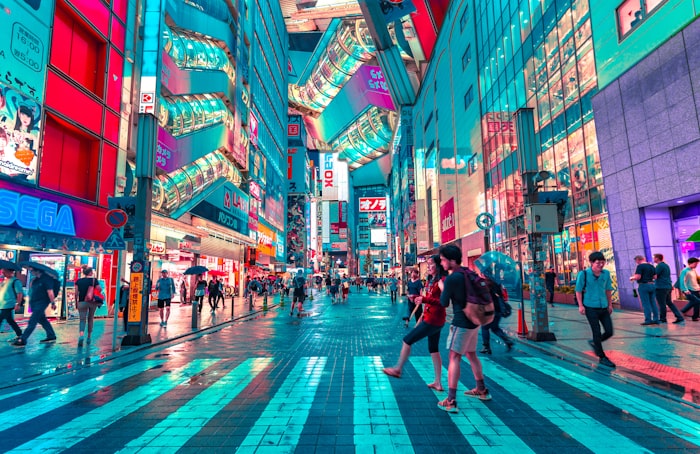
Tokyo is a city that reveals itself slowly. A week gets you the neon and the temples; a few months gets you a neighbourhood, a local izakaya, and a working understanding of a system that is far more navigable than its reputation suggests. This guide covers a long stay: arriving, finding somewhere to live, getting connected, working, eating, and going out.
Arriving and the paperwork
Secure your visa status first — work visa, Digital Nomad Visa, or student visa — because it determines nearly everything downstream. Have your employer or school send documentation early. Japanese bureaucracy runs on paper and physical stamps to a degree most Western newcomers underestimate, and processes that could be done online elsewhere often require an in-person visit here.
Two early tasks matter: registering your address at your local ward office, and enrolling in national health insurance. Do both promptly — they gate a lot of ordinary life, from phone contracts to bank accounts. A personal seal (hanko) is still requested in some contexts, though this is slowly easing.
Finding somewhere to live
Tokyo’s rental market is famously particular about foreign tenants, which is why foreigner-friendly agencies exist and are worth using. GaijinPot Housing and Sakura House are the usual starting points, offering English-language listings and, crucially, landlords who will actually rent to you without a Japanese guarantor.
Traditional rentals often involve key money (a non-refundable gift to the landlord), deposit, agency fee and guarantor requirements stacked together — the upfront cost can be several months’ rent. Share houses and furnished monthly apartments sidestep most of this and are a sensible landing pad.
On location: central wards like Shibuya, Shinjuku and Minato are convenient and expensive. Areas a few stops out — Nakameguro, Koenji, Kichijoji, Shimokitazawa — offer more space and character for less, and Tokyo’s train network makes the trade-off painless. Proximity to a useful line matters more than proximity to the centre.
Getting connected
For short stays, an eSIM is the easiest route. Ubigi, Airalo and Sakura Mobile all offer Japan-specific plans you can activate before landing, typically $15–30 for 5–20GB over one to four weeks. Most phones from the last several years support this.
For longer stays, a physical SIM or full contract with one of the major carriers gives better value, though contracts generally require a residence card and a Japanese bank account — another reason to get the ward office registration done early. Coverage across Tokyo is excellent, including underground on most train lines.
Working from Tokyo
The coworking scene is mature and well-suited to focused work, reflecting a broader culture of quiet professionalism. WeWork runs multiple locations across Shibuya, Marunouchi, Roppongi and Ginza with the familiar global format and day passes. Fabbit is a homegrown Japanese chain with a strong domestic presence.
Cafe working is more constrained than in Europe — many places are small, busy and not designed for laptops, and lingering over one coffee is less accepted. Chains oriented to it exist, but a coworking membership is the more reliable choice if you work daily.
One practical note for remote workers: the time zone is a genuine factor. Working with European or American teams means either very early or very late calls, and it shapes the experience of living here more than most people anticipate.
Healthcare
Japan’s national health insurance is mandatory for residents and enrolment happens at your ward office. It is genuinely good value, covering roughly seventy per cent of costs, with the remainder paid at point of care. Standards are high and waiting times are short by international comparison.
The main friction is language. English-speaking doctors exist, particularly in central Tokyo and at international clinics, but they are not the default — it is worth identifying a clinic before you need one rather than during an emergency.
Eating
Tokyo has more Michelin-starred restaurants than any city in the world, but the more useful fact is that the floor is extraordinarily high. An unremarkable neighbourhood ramen shop or a station-basement lunch set will be better than the equivalent almost anywhere else.
Specialisation is the organising principle — restaurants tend to do one thing. Department store food halls (depachika) are worth understanding early, as is the convenience store, which occupies a genuinely different and better position here than the word suggests. Many small places are cash-only and some seat under ten people.
Nightlife
Tokyo’s nightlife is enormous and varied, from tiny hidden bars to all-night karaoke. Shibuya skews younger, with clubs and izakayas clustered around the crossing. Shinjuku holds Golden Gai, a dense maze of bars seating five to eight people each, every one with its own theme and character.
An izakaya crawl is the standard shape of a night out — small plates, drinks, then moving on. The critical practical detail is the last train: services stop around midnight and resume early morning, so a night out either ends before it or continues until dawn. There is no middle option, and this single fact structures Tokyo evenings more than anything else.
The bottom line
Tokyo is safe, extraordinarily well-run, and easier to live in day-to-day than its bureaucracy suggests. The real barriers are language and the rental market’s upfront costs, not the city itself. People who settle well tend to sort the ward office and insurance in the first fortnight, choose a neighbourhood by train line rather than prestige, and accept that fluency changes the experience substantially.