
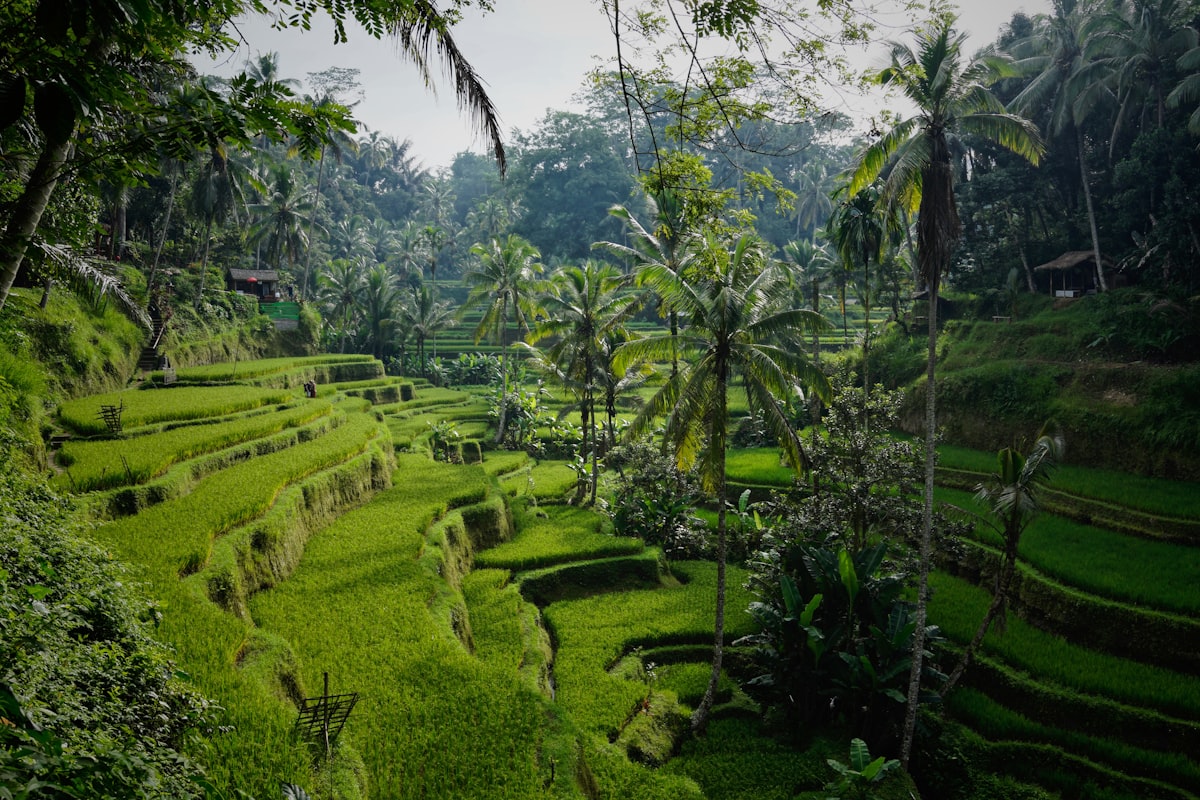
Ubud is Bali’s arts and culture heartland. It sits in the island’s interior, about 600 metres above sea level in the Gianyar regency, surrounded by rice terraces, river gorges, and some of the densest concentration of Hindu temples on the island. It is also, increasingly, a place where people come to be photographed in front of those things rather than to actually experience them.
Both things are true simultaneously, which is what makes Ubud interesting. Strip away the overpriced healing centres and the infinity pool Instagram shots and there’s a place of real substance — a town that has been a centre of Balinese artistic and spiritual life for centuries, that still produces extraordinary traditional art, music and dance, and where the landscape within fifteen minutes of the main drag is as beautiful as anything in Southeast Asia. Our complete Bali guide covers the whole island — this article focuses specifically on Ubud.
What Ubud Actually Is
Ubud is not a beach town. It’s a highland market town that became famous internationally partly through Elizabeth Gilbert’s book and the subsequent film, and has been managing that fame (poorly, in places) ever since. The original draw was legitimate: Ubud has been a centre of Balinese painting, woodcarving, silver work and traditional dance for at least two centuries. The royal palace is here. Major temples are here. The rice terrace landscape here is some of the most photogenic in Asia.
What’s happened since the fame arrived is familiar from every “discovered” place: the main street (Jalan Raya Ubud and its southern continuation toward Monkey Forest Road) is now lined almost entirely with tourist restaurants, souvenir shops, wellness centres and boutique hotels. The food is overpriced. The cafes are designed for content creation. The cooking class operators are aggressive.
Ten minutes outside this strip, by scooter or hired driver, the character changes completely. The rice terrace villages on the way to Tegallalang. The temple complex at Tirta Empul. The river gorge walks. The road south toward Bedulu. That’s the Ubud worth seeing.
What to Do in Ubud — What’s Actually Worth It
Tegallalang Rice Terraces
Go at 6am. Not 9am, not after breakfast — 6am, before the light gets harsh and before the tour buses arrive. The terraces are spectacular in the early light, mist sitting in the valley, almost no one around. By 9am there are photographers every fifteen metres and the “swing over the rice terraces” operators are setting up. The terraces themselves haven’t changed but the experience has transformed.
Entry is free (or a modest voluntary donation) at the main viewing areas, though some private viewpoints charge. Walk through the terraces rather than just photograph them from the road. They’re active agricultural land and the irrigation system (subak) is a UNESCO-listed piece of cultural heritage.
Tirta Empul Temple
One of the most sacred Hindu temples in Bali, built around a natural spring considered holy for over a thousand years. Pilgrims come to purify themselves in the spring’s pools — there are multiple bathing pools with jets, each with a specific spiritual purpose. Tourists are permitted to participate (with appropriate dress — a sarong is required and available at the entrance for a small rental fee).
This is worth doing properly. Bathe, observe, be quiet. The temple is genuinely moving if you approach it with respect rather than as a selfie opportunity. The walk through the inner courtyard to the pools passes active shrines covered in offerings. Go on a religious holiday if possible — the temple fills with Balinese Hindus in ceremonial dress, and the atmosphere is extraordinary.
Campuhan Ridge Walk
Free. Quiet on weekday mornings. A dirt path that runs along a ridge between two river valleys, through grass and jungle, starting near the Murni’s Warung end of town and ending at the Karsa Spa. Takes about an hour at an easy pace. No entrance fee, no vendors, no tour operators — just a walk through the landscape. One of the few things in Ubud that hasn’t been commercialised yet. Go early before the heat builds.
Traditional Dance
Balinese traditional dance — particularly the Kecak fire dance — is one of the more extraordinary things you can see anywhere in Southeast Asia. The Kecak involves dozens of men chanting in interlocking rhythmic patterns while performers enact scenes from the Ramayana. It’s hypnotic and strange and genuinely moving.
The best setting for Kecak is at Pura Dalem Taman Kaja in Ubud town (evening performances, modest entrance fee) or at Pura Luhur Uluwatu temple on the Bukit peninsula at sunset — the clifftop setting adds significantly to the experience. The performances in Ubud town are more accessible; Uluwatu requires transport but the combination of sunset, temple and ocean backdrop makes it the better choice if you’re willing to travel.
The Sacred Monkey Forest
Decent but overpriced. The forest itself — a genuine ancient temple complex in a gorge of giant trees — is atmospheric. The monkeys are entertaining but aggressive and will steal anything accessible (phones, sunglasses, bags). Entry costs around $6-8 USD and the place is busy most of the day. If you’re choosing between this and an early morning at Tegallalang, do Tegallalang. If you have time for both, it’s worth an hour.
Cooking Classes
Worth doing — just not at the operators on the main tourist strip who advertise aggressively. Pick one that collects from the market in the morning, teaches authentic Balinese dishes (not just the tourist-safe versions), and is based slightly outside town. Casa Luna cooking school has a decent reputation. Prices range from 400,000 to 700,000 IDR. Four to six hours, you eat everything you cook, and you come away with recipes that actually work at home.
Day Trips from Ubud
Mount Batur Sunrise Hike
An active volcano at around 1700m. The standard sunrise hike leaves at 2am, takes about two hours to ascend, and you’re at the crater rim for first light with views over Lake Batur and (on a clear day) to the coast. The path is well-defined and the guides are experienced — you need a guide, it’s not optional and for good reason (the terrain is disorienting at night). Moderately strenuous. Takes most of the day. Book through a reputable operator and clarify what’s included.
Tirta Gangga Water Palace
About an hour east of Ubud, in the Karangasem regency. A royal water garden built in the 1940s with tiered fountains, koi ponds and stone sculptures set against rice terrace backdrop. Modest entry fee, rarely overcrowded. Combine with a walk through the surrounding rice fields and a lunch at one of the warung on the ridge — the views are outstanding.
Sidemen Valley
One of the least-visited but most beautiful areas of Bali — a deep valley south of Gunung Agung with rice terraces, traditional villages and none of the tourist infrastructure of Ubud. Best as a day trip or a one-night stay. The pace is slower, the landscape is extraordinary, and the craft traditions (weaving especially) are more intact than in Ubud itself.
Where to Stay in Ubud
The rice terrace area north of town (around Tegallalang and Payangan) has the most spectacular villa settings — infinity pools overlooking valley views, surrounded by jungle, very quiet. The trade-off is you need transport everywhere; it’s a 20-minute scooter or car ride into town.
Town centre accommodation is convenient but noisier, and the character of the surrounding streets is heavily commercial. Staying in the centre makes sense for one or two nights of exploration; for longer stays, the outskirts are significantly more pleasant.
Budget range: guesthouses and family homestays (150,000-300,000 IDR/night), mid-range boutique villas (800,000-1,500,000 IDR), high-end resort villas (1,500,000+). The high-end options here — particularly around the rice terrace areas — represent genuinely good value compared to similar properties in Europe or Australia.
Getting to Ubud from South Bali
It’s 1.5 to 2.5 hours depending on traffic and where you’re starting from. Bali’s traffic is significant and the roads narrow as you get into the Ubud area. Options: hire a private driver for the day (around 400,000-600,000 IDR, worth it), rent a scooter if you’re confident (the road up from the south is manageable, just watch the bends), or book a metered taxi via Grab or Gojek. Don’t take a regular taxi — the price is negotiated upfront and invariably high.
How Long to Spend in Ubud
Two nights is the minimum that makes sense given the travel time. Four nights is better — it gives you time for the early morning Tegallalang visit, a day trip to Batur or Tirta Gangga, the Campuhan walk, a cooking class, and some genuinely aimless exploration of the surrounding villages.
Some people come and stay for months. The long-term appeal is real: it’s cooler than the coast, the creative community is genuine, the pace is slower. But the costs have risen substantially — Ubud is no longer cheap. For a broader look at what to do across the island, see our guide to things to do in Bali and our coverage of Bali’s best destinations.
Practical Notes
Temperature: 5-8 degrees cooler than the coast. Pack a light layer for evenings. The humidity is similar to the south.
Mosquitoes: more prevalent than the coast due to the jungle surroundings. DEET is your friend. See our Bali healthcare guide for health considerations including dengue awareness.
Scooter rental: available in town, around 60,000-80,000 IDR per day. If you’re comfortable on a scooter, it’s the only practical way to explore the surroundings. If you’re not, hire a driver. There is no public transport to speak of. Our scooter rental guide covers what to know before you ride.
Travel insurance: if you’re renting a scooter or doing the Batur hike, insurance that covers activities is worth having. SafetyWing is a popular option for travellers spending extended time in Bali.