
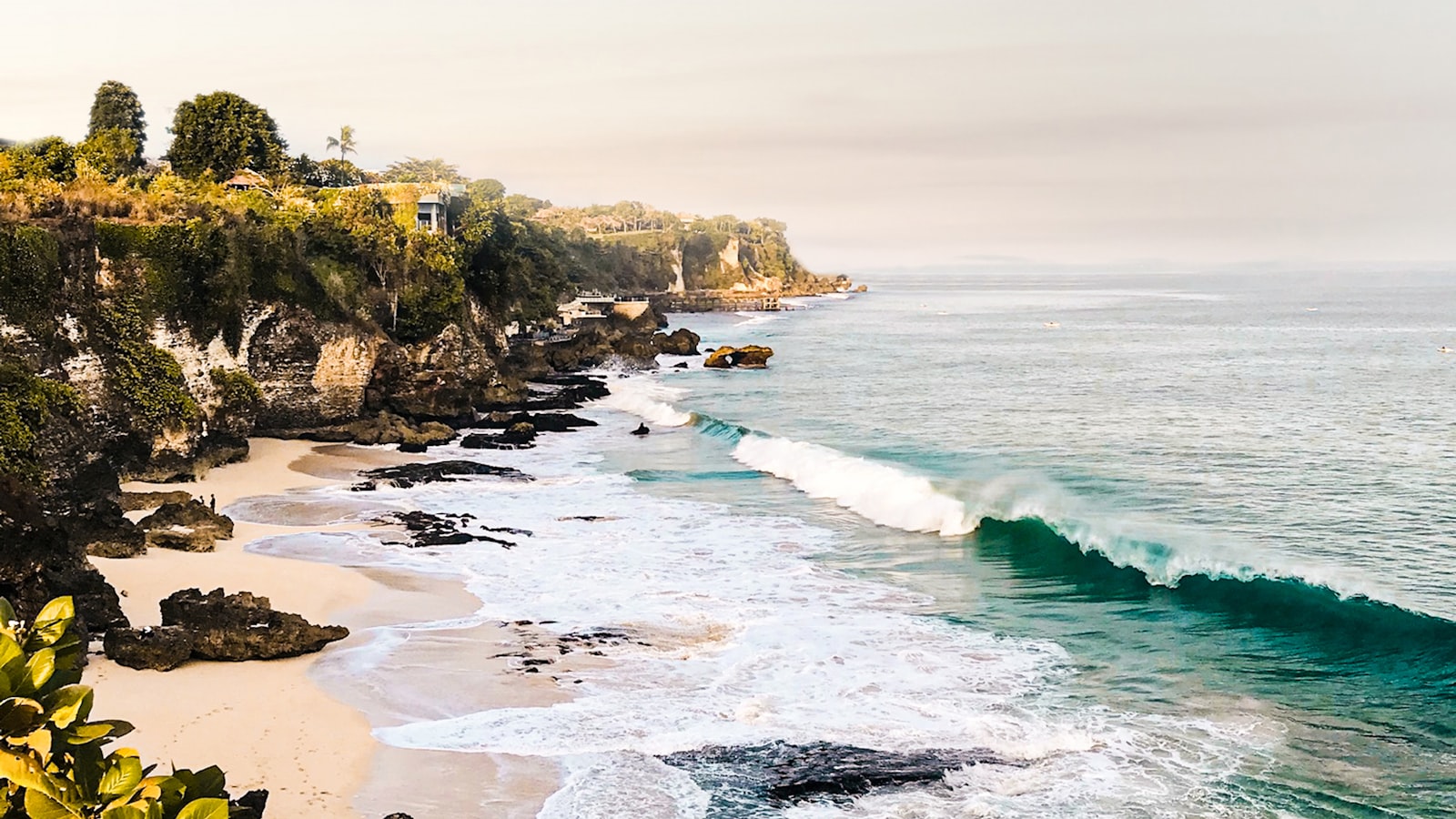
Bali is one of the world’s great surfing destinations — consistent swell year-round, breaks for every level, and a surf infrastructure that makes it genuinely accessible whether you’ve never stood on a board or you’ve been surfing for 20 years. Here’s how to approach it sensibly.
The Main Breaks by Level
Kuta Beach is where most beginners start, and for good reason. The waves are consistent, small (usually 0.5–1.5m), slow, and forgiving. The sandy bottom means falls are less punishing. Hundreds of instructors and surf schools operate from the beach — an introductory lesson costs IDR 200,000–350,000 for 2 hours including board and basic instruction. Most people stand up in a session or two. Kuta gets crowded but the break is wide enough that it doesn’t feel dangerous.
Seminyak and Legian (the beaches directly north of Kuta) offer slightly less crowded conditions with similar wave characteristics — a good progression from Kuta once you’re comfortable.
Canggu is the next step up. Echo Beach and Batu Bolong are the main breaks — more powerful than Kuta, faster, and more varied. Echo Beach in particular handles bigger swell and has a genuine surf culture around it. Suitable for intermediate surfers who are comfortable in the water. Lots of surf schools here as well, quality tends to be higher than the Kuta beach hustle.
Uluwatu on the Bukit Peninsula is world-class and well-known. The break works off an underwater reef below a dramatic cliff — it produces long, hollow left-handers that are some of the best waves in Bali. This is for experienced surfers only. It’s fast, the reef is sharp, and the paddle out through the cave requires competence in the water. Do not attempt this if you’re not genuinely an experienced surfer.
Padang Padang is close to Uluwatu and is a short, powerful barrel that breaks over a shallow reef. Very demanding — best surfed on moderate swell (6–8 feet) rather than when it’s massive. Experienced surfers only. Worth watching even if you can’t surf it: you can see the break clearly from the entrance rocks.
Bingin is another Bukit break — more accessible than Uluwatu or Padang Padang, but still requires intermediate-to-advanced surfing ability. Shorter ride, good for working on specific moves. The vibe at Bingin is mellower than Uluwatu and it suits people who want to focus on surfing rather than competing for waves at a busy break.
Medewi on Bali’s west coast is a long left-point break that’s less known and less crowded. A longer, gentler wave than the Bukit Peninsula breaks — suited to intermediate surfers wanting to work on their technique without the intensity of the south.
Best Time to Surf in Bali
Bali has surf year-round, which is part of its appeal. The two main seasons:
Dry season (April–October) is peak surf season on the west-facing breaks — Uluwatu, Padang Padang, Canggu, and Medewi all receive the strongest swell from the Indian Ocean. This is when the famous breaks are working at their best. June–August has the most consistent swell and draws the most surfers.
Wet season (November–March) brings swells to Bali’s east coast — breaks like Nusa Dua and Sanur come into their own. West-facing breaks still work on their day but are less consistent. Kuta is surfable year-round.
Surf Schools and Lessons
Quality varies significantly. The beach at Kuta has hundreds of instructors — some excellent, some who are primarily hustlers. For Kuta lessons, a fixed-price school with reviews (like Rip Curl School of Surf or Pro Surf School) is a safer bet than a random tout on the beach. Expect to pay IDR 300,000–500,000 per session at a reputable school.
In Canggu, schools like Odysseys Surf School and Drifter Surf Shop have good reputations. The quality of instruction at Canggu schools is generally higher than at the Kuta beach hustle.
For multi-day programmes or those serious about improving, dedicated surf coaching programmes (3–7 days of structured coaching) are available from several camps in Canggu and the Bukit Peninsula. These cost USD 200–600 for a week of coaching and are worth it if surfing is the primary reason you’re in Bali.
Board Rental
Board rental is everywhere near all the main breaks. Soft-top beginner boards: IDR 50,000–80,000 per hour, IDR 100,000–150,000 per day. Performance shortboards and longboards: IDR 60,000–120,000 per hour. Negotiate for day rates if you’re staying out all day — most shops will discount.
Rash guards (IDR 20,000–40,000/day) are worth renting or buying for the combination of UV protection and reducing friction on the board. Bali’s sun is intense and a few hours in the water will burn you without protection.
Safety on the Water
Know your level and surf it accordingly. The most common serious injuries in Bali come from experienced-seeming surfers attempting breaks beyond their ability, particularly at Uluwatu and Padang Padang where the reef is shallow and unforgiving. Reef rash (cuts from coral) is common and can get infected in tropical conditions — clean and treat immediately, see a doctor for any deep cuts.
Rip currents exist at all Bali beaches. If caught in a rip, don’t fight it directly — swim parallel to the shore until you’re out of the current, then come back in. Kuta has lifeguards; more remote breaks often don’t.
Respect the surf hierarchy at crowded breaks — the person closest to the peak has priority. Beginners at Kuta generally have more latitude but learning basic etiquette makes for a better experience for everyone. At the Bukit Peninsula breaks in particular, the local surf community is protective of the waves and aggression toward kooks (inexperienced surfers dropping in on waves they shouldn’t be on) is real.
Best Bases for Surfing
Beginners: Stay in Kuta or Legian — everything is on your doorstep and you can walk to the beach for morning sessions without planning. It’s not the most atmospheric part of Bali but it’s the most practical for learning.
Intermediate: Canggu is the pick. Better waves, better cafes and restaurants, a strong surf culture and digital nomad community, and easy access to both the Canggu breaks and day trips to the Bukit Peninsula.
Advanced: The Bukit Peninsula — Uluwatu, Bingin, Balangan, or Padang Padang. Basic accommodation near the breaks is affordable (IDR 200,000–400,000/night for a simple room with AC); the trade-off is that you’re far from most of Bali’s other attractions. Most serious Bukit surfers are there specifically for the surf and don’t need much else.
More Bali Guides
If you’re basing yourself in Bali for surf, the Canggu Guide and Bali Neighbourhoods Guide will help you pick the right base. For the broader picture on living and working in Bali, see the Bali Digital Nomad Guide. Internet and connectivity while you’re here: Bali SIM Card Guide.