
The quick version: A single person can live comfortably in Bangkok on USD 1,500–2,500/month, covering a good-area apartment, a mix of street food and proper meals, transport, and a real social life. Frugal budgets of USD 1,000–1,300 are achievable eating local; premium lifestyles with a large apartment and regular travel run USD 3,000–4,500+. Bangkok is cheaper than Singapore and comparable to or slightly cheaper than Bali, with noticeably better infrastructure.
Bangkok is one of the most cost-efficient major cities on the planet — but the numbers you see online often skip the details that actually matter. This is what it costs to live in Bangkok in 2026, based on real spending rather than budget travel assumptions.
The One-Number Summary
A single person can live comfortably in Bangkok on USD 1,500–2,500 per month. That includes decent accommodation in a good neighbourhood, eating well (mix of local food and occasional Western meals), transport, and a reasonable social life. If you’re frugal and eat local constantly, USD 1,000–1,200 is achievable. If you want a large apartment in a prime area, regular dining at mid-range restaurants, and weekend travel, budget USD 3,000+.
Accommodation
This is your biggest variable. Bangkok has a wide range of options across very different neighbourhoods.
Studio apartment in a central area (Sukhumvit, Silom, Sathorn): THB 12,000–25,000/month (USD 340–700). At the lower end you get a serviceable but basic studio; at the upper end, a clean modern unit in a managed condo with pool and gym access.
One-bedroom apartment in a central area: THB 18,000–40,000/month (USD 500–1,100). The sweet spot for most expats wanting space without paying premium prices is THB 20,000–28,000 for a decent 1BR in areas like Ekkamai, Thong Lo, or On Nut.
High-end or larger apartments: THB 45,000–100,000+/month (USD 1,250–2,800). Thong Lo, Phrom Phong, and Langsuan are the premium residential areas — expect rooftop pools, concierge, and strong expat communities at this price point.
Utilities (electricity, water, internet) typically add THB 1,500–4,000/month on top of rent. Bangkok summers push electricity bills up significantly if you run AC constantly — budget THB 2,000–3,000 for a studio during hot months.
Food and Dining
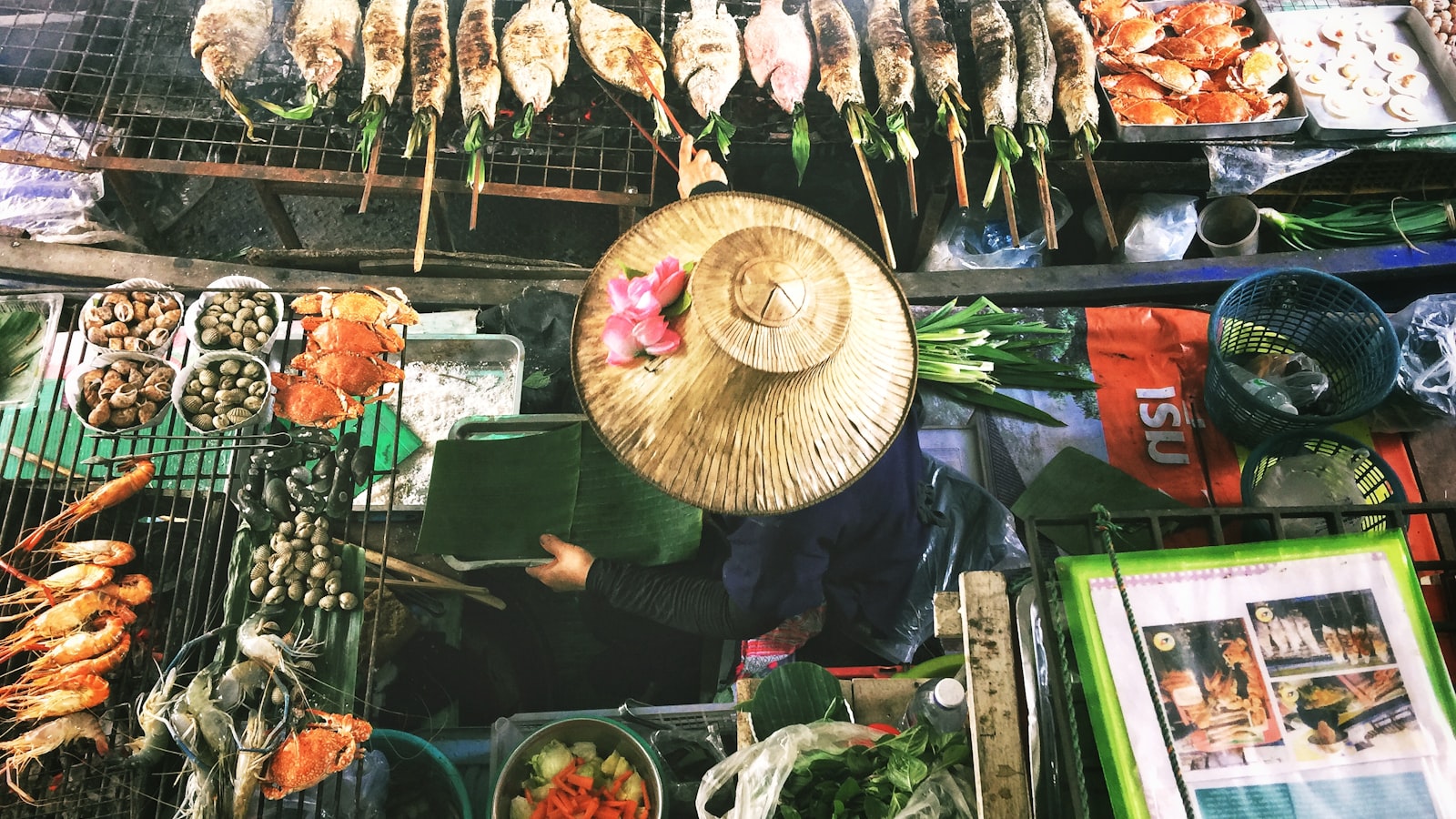
Street food in Bangkok is both excellent and cheap. A full meal from a street stall or market costs THB 50–100 (USD 1.40–2.80). A sit-down local restaurant meal runs THB 100–200. If you eat Thai food for most meals, your food budget can be THB 200–300 per day without trying hard.
Western food is readily available but adds cost: a burger at a decent expat bar runs THB 250–450, a pizza THB 350–600. A meal at a mid-range Western or international restaurant typically costs THB 400–800 per person before drinks.
Groceries from Tops, Villa Market, or Gourmet Market cost more than street food but less than equivalent Western supermarkets — budget THB 8,000–15,000/month if you cook at home regularly.
Coffee: a flat white at a specialty cafe runs THB 120–180. A Thai iced coffee from a street cart is THB 30–50. Bangkok’s cafe scene is excellent, particularly in areas like Ari, Ekkamai, and Thong Lo.
Transport
Bangkok’s BTS Skytrain and MRT metro are efficient and cheap. A single journey costs THB 17–59 depending on distance; a monthly pass on the BTS runs around THB 1,380 (unlimited travel on one line). If you live near a Skytrain station, you may not need anything else for your daily commute.
Grab (the dominant rideshare app) fills the gaps — short rides within a neighbourhood cost THB 60–100, cross-city trips THB 150–300. Motorcycle taxis (mototaxis) are the fastest and cheapest option for short hops: THB 15–50 for a few kilometres.
Few expats own cars in Bangkok — traffic is bad, parking is difficult, and the public transport and Grab combination covers most situations. Budget THB 2,000–5,000/month for transport depending on how much you use Grab.
Health Insurance
Local Thai health insurance for a healthy adult in their 30s starts around THB 15,000–25,000/year (USD 420–700), giving access to Thailand’s excellent private hospital network. International health insurance with global coverage runs significantly higher — USD 1,500–3,000+/year depending on coverage and age.
For digital nomads, travel insurance with international medical coverage is worth considering as a flexible alternative. SafetyWing’s Nomad Insurance covers medical emergencies internationally for around USD 56/4 weeks — a cost-effective starting point for shorter stays or those who move frequently between countries.
Gym and Fitness
Most condo buildings include a pool and basic gym in the building fee, so if your accommodation includes facilities you may need nothing extra. Standalone gym memberships at chains like Virgin Active or Fitness First run THB 1,500–2,500/month. Muay Thai gyms are a Bangkok highlight — classes at a dedicated training gym cost THB 300–600 per session, or THB 4,000–8,000/month for a training programme.
Entertainment and Social Life
A pint of beer at an expat bar: THB 150–250. A cocktail at a rooftop bar: THB 350–600. Cinema ticket: THB 200–280. Bangkok has a genuinely large and active expat social scene — there are regular events, networking nights, and social clubs across almost every interest. Most free social activities (temple visits, markets, parks) cost nothing or close to it.
Monthly Budget Summary
| Lifestyle | Monthly budget (USD) |
|---|---|
| Frugal (eating local, modest area) | 1,000–1,300 |
| Comfortable (good area, mix of dining, regular social life) | 1,800–2,500 |
| Premium (large apartment, regular dining out, travel) | 3,000–4,500 |
Bangkok consistently ranks among the best value cities in Asia for quality of life relative to cost. The infrastructure is modern, food is exceptional, international connectivity is strong, and the gap between what you’d spend here versus an equivalent lifestyle in a Western city is significant.
Coworking and Internet
Bangkok has a strong coworking scene concentrated in Silom, Asok, and increasingly Ari and Lat Phrao. Day passes run THB 200–400 (USD 5–11) at mid-range spaces; dedicated desks start around THB 3,500–5,500/month (USD 100–155). The major chains — HUBBA, The Hive, Mango — are reliable with consistent connectivity. Many cafes in Ari and Ekkamai function as informal coworking spaces with fast wifi, good coffee, and no pressure to leave. A dedicated workspace budget of THB 3,000–5,000/month is realistic for part-time use.
Home internet runs THB 400–700/month (USD 11–20) for fibre connections, widely available in condos and apartments. Mobile data is extremely cheap — AIS, DTAC, and True all offer competitive plans; THB 300–400/month gets you 30–50GB of 4G data. The mobile infrastructure is solid in central Bangkok and most tourist areas.
Utilities
Electricity is the major variable and Bangkok’s heat makes it significant — air conditioning runs constantly for most of the year. Expect THB 1,500–3,500/month (USD 42–98) for a standard one-bedroom apartment running AC most of the day. Water is minimal at THB 100–200/month. Many condo rentals include water in the rent; electricity is almost always metered separately. If an apartment quote seems cheap, ask specifically about electricity — the delta between quoted rent and actual all-in cost is usually electricity.
Bangkok vs Other Southeast Asian Cities
For a mid-range digital nomad lifestyle, Bangkok consistently comes in cheaper than Singapore (roughly 40–50% less) and Bali (comparable or slightly cheaper depending on accommodation choices), and more expensive than Chiang Mai (20–30% cheaper than Bangkok for most categories). The value proposition versus Bali is the infrastructure — Bangkok’s public transport, healthcare, and logistics are significantly better at comparable price points. Versus Singapore the comparison is stark: a lifestyle that costs SGD 4,000–5,000/month in Singapore runs THB 40,000–55,000/month (USD 1,100–1,500) in Bangkok.
• Best Neighbourhoods in Bangkok — where the accommodation prices above actually apply
• Bangkok Digital Nomad Guide — the wider lifestyle picture
• Bangkok Visa Guide — sort your visa before you budget for the long haul
• Bangkok Healthcare Guide — insurance options in more depth
Budgeting for healthcare
Whatever budget tier you land in, don’t skip insurance. SafetyWing Nomad Insurance covers medical emergencies internationally for around USD 56/4 weeks — a flexible, affordable baseline while you’re getting settled.
Frequently Asked Questions
How much does it cost to live in Bangkok as a digital nomad?
Most nomads land in the USD 1,500–2,500/month range for a comfortable lifestyle, covering a one-bedroom apartment in a good area, regular eating out, transport, and coworking. Frugal budgets around USD 1,000–1,300 are realistic if you eat local food and live modestly.
Is Bangkok cheaper than Bali or Singapore?
Bangkok is roughly comparable to or slightly cheaper than Bali depending on accommodation choices, and 40–50% cheaper than Singapore for an equivalent lifestyle, with meaningfully better public transport and healthcare infrastructure than Bali.
What’s the biggest variable in the Bangkok cost of living?
Accommodation, by far. A studio in a central area can run THB 12,000–25,000/month while a premium one-bedroom in Thong Lo or Phrom Phong can exceed THB 45,000–100,000/month — the same city, wildly different price points depending on neighbourhood and building quality.
Do I need a car in Bangkok?
No. Most expats rely on the BTS Skytrain, MRT metro, and Grab rideshare/mototaxis. Traffic and parking make car ownership impractical for most residents, and the public transport plus Grab combination covers nearly every situation.