
TL;DR: Singapore gets unfairly dismissed as a sterile stopover — a place to change planes, not to spend time. Stay longer than a weekend and that reputation falls apart fast. This is a city-state that packs world-class food, lush tropical greenery, half a dozen distinct cultural quarters and some genuinely jaw-dropping architecture into an area smaller than many cities’ suburbs. It’s expensive, yes, but it’s also clean, safe, ferociously efficient and endlessly walkable. For digital nomads and long-stay travellers using it as a regional base, the question isn’t whether Singapore is worth time — it’s how to spend that time well. Here are 22 experiences that genuinely earn their place, with honest notes on what to prioritise and what to skip.
Singapore gets unfairly dismissed as a sterile stopover — a place to change planes, not to spend time. Stay longer than a weekend and that reputation falls apart fast. This is a city-state that packs world-class food, lush tropical greenery, half a dozen distinct cultural quarters and some genuinely jaw-dropping architecture into an area smaller than many cities’ suburbs. It’s expensive, yes, but it’s also clean, safe, ferociously efficient and endlessly walkable. For digital nomads and long-stay travellers using it as a regional base, the question isn’t whether Singapore is worth time — it’s how to spend that time well. Here are 22 experiences that genuinely earn their place, with honest notes on what to prioritise and what to skip.
A quick orientation helps: the MRT puts almost everything within easy reach, the action concentrates around Marina Bay, the colonial Civic District and the cultural quarters of Chinatown, Little India and Kampong Glam, and nature sits surprisingly close to the centre. Pick a base near a train line and you can see a remarkable amount on foot and rail alone.
The Icons, Done Properly
Some of Singapore’s headline attractions are tourist traps; these three aren’t. Gardens by the Bay is the city at its most spectacular — the Supertree Grove is free to wander and magical after dark during the nightly light show, while the two cooled conservatories, the Cloud Forest (with its indoor mountain and waterfall) and the Flower Dome, are worth the ticket on a hot afternoon. Go late in the day so you catch both daylight and the evening show. For an aerial perspective, the elevated OCBC Skyway walkway strung between the Supertrees is a cheap, fun add-on that puts you up among the canopy.
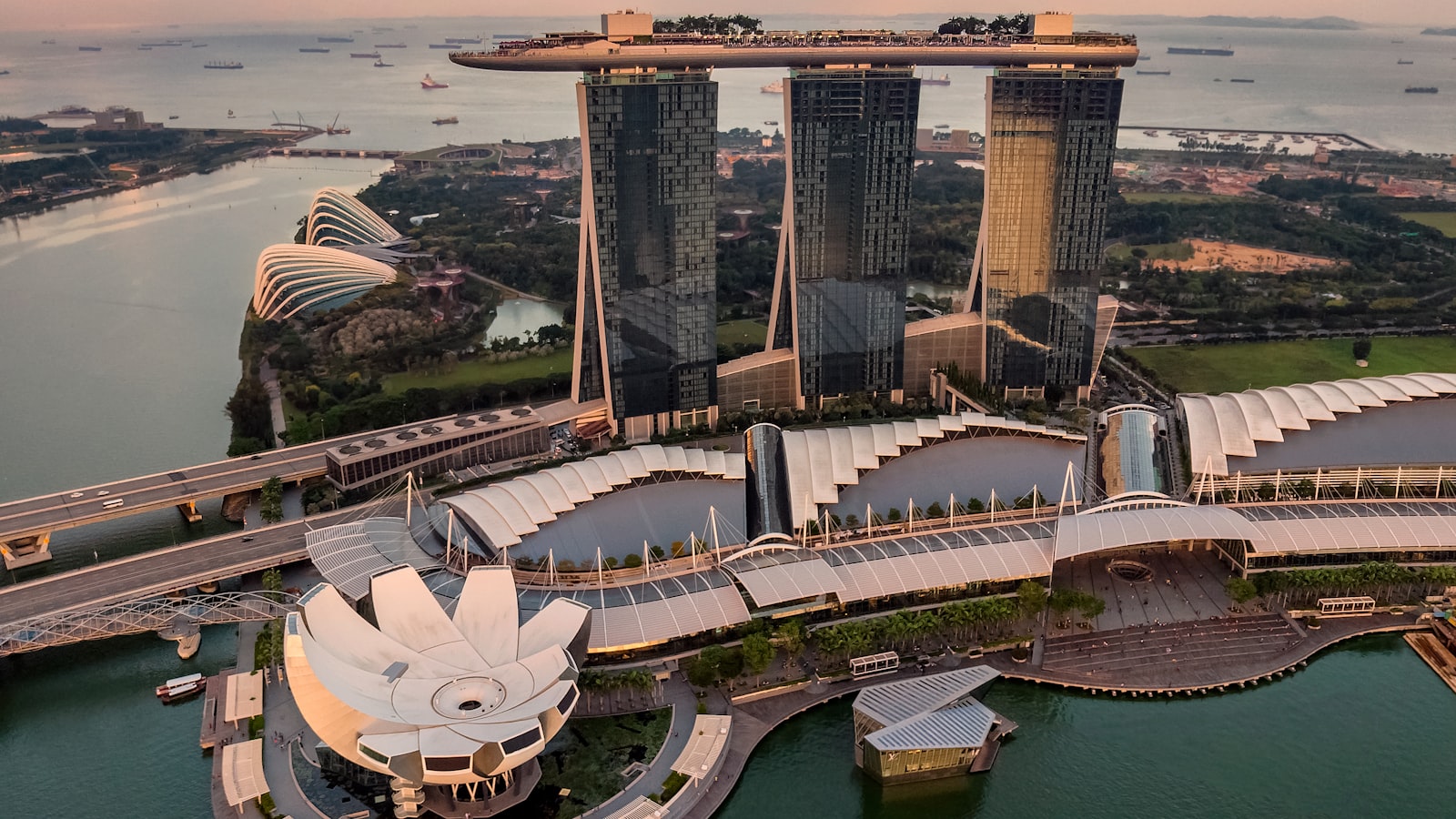
Next door, the Marina Bay Sands SkyPark observation deck delivers the postcard view across the bay and the financial district; if you’d rather not pay for the deck, a drink at one of the rooftop bars gets you a similar panorama. And out at the airport — yes, the airport — Jewel Changi is a destination in itself, built around the Rain Vortex, the world’s tallest indoor waterfall, ringed by terraced gardens. It’s a genuinely lovely place to kill a few hours, layover or not.
Round out the bayfront with a stroll along the waterfront promenade past the original Merlion — Singapore’s half-lion, half-fish mascot — and across the DNA-shaped Helix Bridge. Time it for after dark and you’ll catch Spectra, the free nightly light-and-water show over Marina Bay, which is genuinely worth lingering for and costs nothing.
The Cultural Quarters
Singapore’s neighbourhoods are where its multicultural identity comes alive, and each rewards an unhurried walk. Chinatown mixes temples, medicinal halls and a heritage centre with hawker food and the surprisingly grand Buddha Tooth Relic Temple. Little India is the most sensory district in the city — garland sellers, spice shops, the riot of the Sri Veeramakaliamman Temple and the wonderfully chaotic Tekka Centre. Kampong Glam, centred on the golden-domed Sultan Mosque, is the hip heart of the Malay-Arab quarter, where Arab Street’s textile shops give way to the murals, cafés and indie boutiques of Haji Lane.
For a quieter, more local flavour, Tiong Bahru is Singapore’s most charming neighbourhood — art-deco walk-ups, an old wet market, and a tight cluster of bakeries, bookshops and cafés beloved by residents. Further out, Holland Village offers a relaxed, expat-leaning dining-and-drinks scene. Spend a half-day in any two of these and you’ll understand Singapore far better than any observation deck can teach you. Each quarter centres on a place of worship worth stepping inside — the Sri Mariamman Temple in Chinatown, the Sultan Mosque in Kampong Glam — and each rewards simply getting lost down its side lanes in search of the next good plate of food.
Green Spaces and Walks
Singapore calls itself a “city in a garden,” and it earns the label. The Singapore Botanic Gardens, a UNESCO World Heritage Site, is free, vast and beautiful, with the world-class National Orchid Garden at its heart — a perfect early-morning escape from the heat. For something wilder, the MacRitchie Reservoir trails wind through genuine rainforest to the TreeTop Walk, a suspension bridge through the canopy where you’ve a real chance of spotting long-tailed macaques and monitor lizards.
The Southern Ridges stitches together a series of parks via elevated walkways — the wave-like Henderson Waves bridge is the highlight — offering forest, sea views and a proper few hours of walking without leaving the city. These green spaces are, for many long-stay visitors, the thing that makes Singapore genuinely liveable rather than merely impressive. Add the leafy hilltop of Fort Canning Park in the centre, and the disused-railway Rail Corridor that now runs the length of the island as a green walking-and-cycling spine, and you have more nature than a city this dense has any right to.
The Food — the Real Reason to Stay
If there’s one unarguable reason to love Singapore, it’s the food, and it’s mostly cheap. The hawker centres are the beating heart of it: Maxwell Food Centre (home of the famous Tian Tian chicken rice), the atmospheric colonial-era Lau Pa Sat, and the local favourite Old Airport Road Food Centre are all essential. A full, brilliant meal at any of them costs a few dollars — the great equaliser in an otherwise pricey city.
Beyond the hawker stalls, work through the national dishes: chilli crab and black-pepper crab (messy, indulgent, best shared), Hainanese chicken rice, laksa, char kway teow and roti prata. Singapore even has Michelin-starred hawker stalls — proof that the best food here isn’t in the fine-dining rooms but at a plastic table under a fan. Come hungry, eat constantly, and pace your dollars on food rather than attractions.
Don’t miss the small rituals either: a breakfast of kaya toast with soft-boiled eggs and kopi at an old-school coffee shop is a daily institution, and the brave should try durian at least once. For a livelier scene, the hawker stalls and seafood of Geylang and the buzz of Tekka Centre in Little India are local favourites, while a single splurge at one of the city’s rooftop or riverside restaurants makes a memorable counterpoint to the hawker trail.
Museums and Culture
When the afternoon heat or a tropical downpour drives you indoors, Singapore’s museums are excellent and air-conditioned. The National Museum of Singapore tells the country’s improbable story with real flair, while the Asian Civilisations Museum on the river is one of the region’s finest, tracing the trade and faith links that shaped Southeast Asia. The Peranakan Museum dives into the distinctive Straits-Chinese culture that gives the city much of its character.
For contemporary art, Gillman Barracks — a cluster of galleries set in restored colonial army buildings — and the National Gallery, housed in the former Supreme Court and City Hall, round out a culture-heavy day. None of these are tourist obligations; they’re genuinely good, and a welcome change of pace. The lotus-shaped ArtScience Museum at Marina Bay, with its rotating blockbuster and digital-art shows, is the most family-friendly of the bunch and a reliable rainy-day option.
More Worth Your Time
A handful of other experiences round out a longer stay. The Singapore Zoo and its after-dark sibling the Night Safari are consistently rated among the world’s best, with open, naturalistic enclosures; budget a half-day. A bumboat cruise along the Singapore River links Clarke Quay, Boat Quay and Marina Bay and is a relaxed way to see the colonial core from the water.
For something gloriously strange, Haw Par Villa is a free, surreal sculpture park depicting Chinese mythology — including the famously gruesome Ten Courts of Hell — and unlike anything else in the city. And to live like a resident, rent a bike along East Coast Park, the long seafront strip where locals cycle, picnic and feast at the seafood centre as the ships drift past. Shoppers, meanwhile, can lose an afternoon and a fortune on the air-conditioned malls of Orchard Road. And for a taste of old Singapore, the pastel shophouses and temples of Joo Chiat and Katong in the east are the heartland of Peranakan culture — and home to some of the city’s best laksa.
Day Trips and Escapes
Even a city this compact has its escapes. Sentosa Island is the resort playground — beaches, Universal Studios, cable cars and the S.E.A. Aquarium — touristy but fun if you’ve got kids or a free day. For the opposite experience, Pulau Ubin is a short bumboat ride into the past: a rustic, near-car-free island of kampong houses, mangroves and the wild Chek Jawa wetlands, best explored by rented bicycle. It’s the most “un-Singapore” thing you can do, and all the better for it.
And if you want to feel like you’ve actually left, Johor Bahru across the causeway in Malaysia is a cheap, easy cross-border trip for shopping, cheaper food and a completely different vibe — just brace for the border queues at peak times. With a little more time, fast ferries reach the Indonesian islands of Bintan and Batam — beach resorts and a genuine change of country less than an hour offshore.
Nightlife
Singapore’s nightlife is polished and pricey, but rewarding if you pick your spots. Clarke Quay is the riverside party strip — loud, mainstream and fun for one night. For something more refined, the restored shophouses of Duxton Hill and the Tanjong Pagar area hide some of Asia’s best cocktail bars (Singapore consistently lands several on the World’s 50 Best Bars list). A single craft cocktail can cost what a whole hawker meal does, so this is a “choose your moments” city — but a sophisticated bar with skyline views is one of the moments worth choosing. The rooftops of the CBD and the speakeasies tucked behind Tanjong Pagar’s shophouses are where the city’s after-dark sophistication really lives — book ahead for the best of them.
Practical Tips
Getting around: the MRT is clean, fast, cheap and reaches almost everywhere you’ll want to go; grab an EZ-Link card (or just tap a contactless bank card) and you’re set. Singapore is also wonderfully walkable in the cooler hours, with sheltered, air-conditioned links through much of the centre.
Heat and money: it’s hot and humid year-round, with no real seasons — plan outdoor sights for the morning and evening and duck into malls, museums or hawker centres during the midday peak. Tap water is safe to drink, and a cheap local SIM or eSIM gives you fast, reliable data for maps and transport apps the moment you land. And before you fly home, claim the GST Tourist Refund Scheme on eligible purchases at the airport — an easy way to claw back a little of what this famously expensive city charges. It’s also worth timing your trip around one of the headline events — Chinese New Year, Deepavali, the Singapore Food Festival or the floodlit night-race Formula 1 Grand Prix — each of which adds a whole extra dimension to the city.
Travel Insurance for Singapore
Singapore has some of the best healthcare in the world, but it’s also some of the most expensive, and a single hospital visit without cover can be eye-watering. Sensible travel and medical insurance is worth having wherever you go. SafetyWing Nomad Insurance is a flexible, monthly option built for travellers and digital nomads — it covers medical care abroad and is easy to start even after you’ve arrived.
Give Singapore more than a layover and it quietly wins you over: a city that works, eats brilliantly, and hides a surprising amount of nature and culture behind the skyline. Prioritise the gardens, the hawker centres and the cultural quarters, spend on food rather than tickets, and you’ll leave understanding why so many remote workers make it their base in the region. Few cities this small reward a longer, slower look quite as generously. Give it the time it deserves, and Singapore stops feeling like a layover and starts feeling like a place you could genuinely settle into.
Related guides:
Travelling to or living in Singapore?
SafetyWing Nomad Insurance covers emergency medical care for travellers and remote workers in Singapore.
Frequently Asked Questions
The Icons, Done Properly
Some of Singapore’s headline attractions are tourist traps; these three aren’t.
The Cultural Quarters
Singapore’s neighbourhoods are where its multicultural identity comes alive, and each rewards an unhurried walk.
Green Spaces and Walks
Singapore calls itself a “city in a garden,” and it earns the label.
The Food — the Real Reason to Stay
If there’s one unarguable reason to love Singapore, it’s the food, and it’s mostly cheap.